
(*) Gigantes Island Tour Packages: Route, Boat, Group Size, and Price Comparison
Compare Gigantes Island tour packages by route, actual boat time, passenger limits, fees, transfers, physical demands, and weather policies.
[ADS]
* Book Now, Pay Reservation Later, Balance on Your Tour Date. Terms and Conditions Apply. Subject to Availability.
Gigantes Island tour packages should be compared by more than the advertised price or number of attractions. A useful comparison looks at the actual route, boat type, passenger capacity, shared-tour minimum, meal arrangement, entrance fees, mainland transfers, physical demands, and protection when weather changes the itinerary.
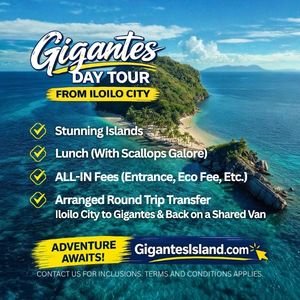
A typical day-tour package may include the island-hopping boat, guide or coordinator, lunch, environmental charges, and entrance fees. However, inclusions differ by seller. Some packages begin only at Bancal Port, while others include a van from Iloilo City, Roxas City, an airport, or a selected hotel. Travelers should receive every inclusion and exclusion in writing before paying.
Tour A, Tour B, and combined Sicogon routes are operator-defined products rather than standardized official itineraries. The final route remains subject to tides, wind, waves, daylight, access restrictions, maritime clearance, and the captain’s safety decision. A package with fewer well-paced stops may provide a better experience than one that promises an unrealistic number of destinations.
Compare the Route Before Comparing the Price
Two packages with similar prices may provide very different experiences. One may focus on beaches, a lagoon, and a sandbar, while another may include longer boat travel or selected land attractions on Gigantes Sur. A combined Sicogon route usually covers a wider area and may require an earlier departure.
Tour A is generally marketed as the more marine-focused option. Possible stops may include Cabugao Gamay Island, Tangke Lagoon, Bantigue Island and Sandbar, Antonia Point, Ojatras Island (Pulupandan), Cabugao Dako Island, or another available beach.
Tour B may combine marine stops with operator-defined land attractions such as the 360 Viewpoint, Pahuwayan Landscape, the Dragon Fruit Farm, or another Gigantes Sur stop. These additions can involve walking, heat, mud, slopes, and limited facilities.
A combined Sicogon–Gigantes tour may include selected Sicogon beaches, Tumaquin Islet, a resort-managed area, or another specifically listed attraction. Mt. Opao and Sicogon’s Lagoon Eco-Trail require separate time, access, and physical preparation and should never be assumed to be included.
| Package Type | Usual Focus | Important Questions |
|---|---|---|
| Tour A | Boat-based island hopping, beaches, lagoon, sandbar, and swimming | Which stops are landings, which are pass-bys, and how are tide substitutions handled? |
| Tour B | Marine attractions plus selected Gigantes Sur land stops | How much walking is required, and what replaces a trail after heavy rain? |
| Sicogon–Gigantes | A wider route connecting separate island areas | What Sicogon locations are included, and what is the expected return time? |
Use the Gigantes Island tour guide to compare shared, private, Tour A, Tour B, and Sicogon options before choosing a package.
Official Gateway Procedures and Provider Verification
Bancal Port in Barangay Bancal, Carles, is designated under Municipal Ordinance No. 2016-03 as the official entrance and exit point and gateway to the municipality’s island destinations. Visitors normally complete the current tourism procedures through the Bancal Tourism Office before authorized island travel.
The Tourism Pass is issued through the tourism office for tourist entry to designated attractions. Travelers may also need to submit passenger details, settle documented charges, attend a briefing, and wait for boarding instructions and maritime clearance.
Every package should identify whether Bancal registration, Tourism Pass arrangements, environmental charges, entrance fees, and boat service are included. Guests should also know the exact reporting area and the person responsible for assisting them at the port.
Use only currently accredited, recognized, and authorized tourism and boat providers. Before paying, request the registered business name, actual operating tour provider, boat operator, and transport provider. An old directory or social-media page does not prove that a business remains authorized or operational on the selected date.
For detailed arrival information, review the Bancal Port guide.
Comparing Actual Tour Time Instead of Pickup-to-Drop-Off Duration
A package may be advertised as a full-day or 16-hour trip because it includes a long road transfer from Iloilo City. That does not mean guests spend the entire period island hopping.
The total pickup-to-drop-off schedule may include:
- Collection from several hotels
- The road journey to Carles
- Breakfast or restroom stops
- Bancal registration and waiting
- Passenger and boat coordination
- Maritime clearance
- Lunch and changing time
- The return drive to Iloilo City
Ask the provider for the approximate boat-departure and boat-return window rather than comparing only the full package duration. A package with a long city transfer may provide the same island-hopping time as a shorter package that begins at Bancal Port.
Tour-Time Questions to Ask
- What time should guests report at Bancal?
- What is the expected boat-departure window?
- How much time is normally spent between island stops?
- Where and when is lunch served?
- What is the expected return to Bancal?
- Is the city return time only an estimate?
Travelers should not schedule an evening flight, fixed ferry, or important appointment after the tour. Boat and road delays can affect the return even when the trip begins on time.
Private Passenger Limits and Shared-Tour Minimum Requirements
Private boat packages should state the authorized passenger limit and whether the price changes according to group size. A private rate may cover the boat only, while meals, entrance fees, and Tourism Pass charges remain payable per traveler.
Private service provides more control over group composition and pacing, but it does not remove safety rules. The captain may still cancel a landing, shorten the route, or avoid an attraction when conditions are unsafe.
Shared Gigantes Island tour packages commonly require a minimum number of confirmed passengers. The booking terms should explain what happens when the minimum is not reached.
- Will the tour move to another date?
- Will the guest be transferred to another shared group?
- Will a surcharge apply?
- Can the booking become a private package?
- Will the payment be refunded or converted into credit?
The provider should also explain the policy for late passengers. Shared departures should not be indefinitely delayed because one guest fails to report on time.
Boat Capacity and Life Jackets
Ask for the boat type, maximum passenger count, and expected number of guests. Children and infants must be included in capacity planning even when they receive discounted or free rates.
Every traveler should have an appropriately sized life jacket. Overloading should never be accepted, and luggage must not block exits or safe movement areas.
Prepaid Fees Versus Legitimate On-Site Charges
Some packages include tourism, environmental, and entrance fees, while others collect them separately. The seller should identify every prepaid charge and every legitimate fee that may be collected during the trip.
Ask whether the following are included:
- Tourism registration and Tourism Pass
- Environmental charges
- Entrance fees at listed attractions
- Guide or coordinator fees
- Boat service
- Lunch and drinking water
- Land transport on an island
- Resort day-use charges
- Optional activities or equipment rental
Carry small-denomination Philippine pesos for legitimate on-site charges that are clearly excluded from the package. Small establishments and island vendors may not accept cards or electronic payments and may have limited change for large bills.
Do not pay an unexpected charge without asking what it covers. If an item was listed as included, keep the written confirmation available for verification.
Meals, Drinking Water, and Dietary Requests
Lunch is commonly included, but the menu and serving location vary. Meals may be served at an island community, beach stop, accommodation, or another authorized dining area.
Seafood is common, and shared meals may include fish, shellfish, squid, scallops, rice, vegetables, and Filipino dishes. Travelers with allergies should disclose them before booking. Last-minute substitutions may be difficult in remote areas.
Vegetarian meals, religious dietary requirements, meals for children, and medically necessary food should also be confirmed in writing. Ask whether drinking water is included and how much is provided. Guests should still carry personal water, particularly on long or heat-intensive routes.
Physical Demands: Trails, Wet Landings, Swimming, and Heat
A responsible package description should explain the physical demands of the route. The term “island hopping” does not mean that every stop is an easy beach landing.
Possible challenges include:
- Stepping into shallow water from the boat
- Crossing wet, uneven, or rocky shores
- Climbing steep viewpoint steps
- Walking over muddy or grassy trails
- Entering a lagoon through a restricted landing area
- Swimming in variable depth and current
- Spending several hours under strong sun
Travelers with limited mobility, pregnancy, heart conditions, balance concerns, or severe motion sickness should discuss their needs before booking. The operator should explain which stops can be skipped and where a guest will wait safely.
Secure sandals or water shoes are more practical than loose slippers. Bring quick-drying clothes, a towel, sun protection, drinking water, medicine, and waterproof storage for phones and documents.
Parents should ask whether the route has areas without railings, steep climbs, or deep water. Children must remain supervised near boats, beaches, trails, and viewpoints.
Captain Authority and Weather-Dependent Routes
The captain has final authority over the safe boat route. Passengers should not pressure the crew to enter a closed lagoon, cross dangerous water, approach a congested landing, or continue when conditions are unsuitable.
The itinerary may be reordered or shortened because of:
- Strong wind or waves
- Changing tides
- Low visibility
- Maritime advisories
- Boat traffic or crowding
- Unsafe trail conditions
- Insufficient daylight
- Group health or safety concerns
A package should include a written policy explaining how a shortened route is handled. The terms should distinguish a complete cancellation before departure from a safety-driven change after the boat has already operated.
Possible remedies may include a refund, partial refund, rebooking, travel credit, alternate activity, or partial charge for services already provided. Verbal assurances should be converted into written terms before payment.
Official Stop Names and the 13-Destination Framework
The Carles Tourism Office materials feature 13 destinations across the broader Carles island area:
- Tangke Lagoon
- Cabugao Gamay Island
- Cabugao Dako Island
- Bantigue Island and Sandbar
- Antonia Point
- Ojatras Island (Pulupandan)
- Mini Boracay (Calumpang)
- Tinagong Bay-Bay (Dakong Bay-Bay)
- Century-Old Lighthouse
- Sicogon Island
- Tumaquin Islet
- Mt. Opao
- Sicogon’s Lagoon Eco-Trail
These 13 places are not a guaranteed one-day checklist. They are spread across different islands and route clusters. Some are marine stops, while others require land transportation, hiking, resort access, or a wider Sicogon itinerary.
Tour sellers may use common variations such as Antonia Beach for Antonia Point or Pulo Pandan for Ojatras Island (Pulupandan). The written itinerary should use clear names so travelers understand what is actually included.
Review the Gigantes Island attractions guide for access, physical demands, tide effects, and naming variations.
Environmental Rules and Responsible Visitor Conduct
Visitors must not remove sand, pebbles, rocks, shells, coral, plants, wildlife, or other natural resources from Carles. This rule applies to beaches, sandbars, caves, lagoons, marine areas, and island attractions.
Responsible conduct includes:
- Keeping all waste secured and returning it to an appropriate disposal area
- Not standing on coral
- Not chasing, feeding, or touching marine wildlife
- Staying on approved paths
- Respecting fishing boats, nets, ropes, and work areas
- Asking permission before photographing residents or private property
A low-cost package is not a good value when it depends on unsafe capacity, unauthorized access, or environmental damage.
Gigantes Island Tour Packages Comparison Checklist
- Compare the actual route, not only the package name.
- Identify the registered and operating providers.
- Confirm Bancal registration and Tourism Pass coverage.
- Compare actual boat time instead of total pickup-to-drop-off duration.
- Check private passenger limits and shared-tour minimums.
- List all prepaid and on-site fees.
- Confirm meals, drinking water, and dietary requests.
- Review walking, swimming, landing, and heat requirements.
- Ask about life jackets and child capacity.
- Read the cancellation and shortened-route policy.
- Accept the captain’s final authority over safety.
- Leave all natural resources undisturbed.
Compare broader inclusions such as accommodation and transfers through the Gigantes Island packages guide.
Book your Gigantes Island hopping experience at GigantesIsland.com/book, or visit GigantesIsland.com/frequently-asked-questions to learn more.
