
(*) Isla Gigantes Travel Guide: Day Tours, Overnight Stays, and Boat Transfers
Plan an Isla Gigantes trip with practical guidance on day tours, overnight stays, Bancal Port transfers, island accommodations, wet landings, and responsible travel.
[ADS]
* Book Now, Pay Reservation Later, Balance on Your Tour Date. Terms and Conditions Apply. Subject to Availability.
Isla Gigantes is a common search term used for the Gigantes Islands, also widely known as Islas de Gigantes, in Carles, Iloilo. Despite the singular word “isla,” the destination is not one self-contained resort island. It is a group of inhabited islands, smaller offshore islets, beaches, lagoons, caves, viewpoints, sandbars, and fishing communities connected mainly by boat.
This geography affects almost every part of the trip. Travelers must decide whether to join a day tour or stay overnight, identify the exact island where an accommodation is located, confirm the correct boat transfer, and prepare for facilities that may be simpler than those in Iloilo City or a large beach resort. A room advertised as being in Isla Gigantes may be on Gigantes Norte, Gigantes Sur, mainland Carles, or another nearby island, and each location can require a different transport arrangement.
First-time visitors should therefore plan around confirmed logistics rather than the destination name alone. The safest approach is to obtain the exact meeting point, operating provider, accommodation location, transfer details, written itinerary, inclusions, payment terms, and weather policy before leaving for Carles.
Why Isla Gigantes Refers to an Island Group, Not One Resort Island
The Gigantes destination includes two principal inhabited islands—Gigantes Norte and Gigantes Sur—as well as several smaller islands and islets visited on organized boat routes. Many of the places shown in travel photographs are separate offshore stops rather than beaches located around one continuous island.
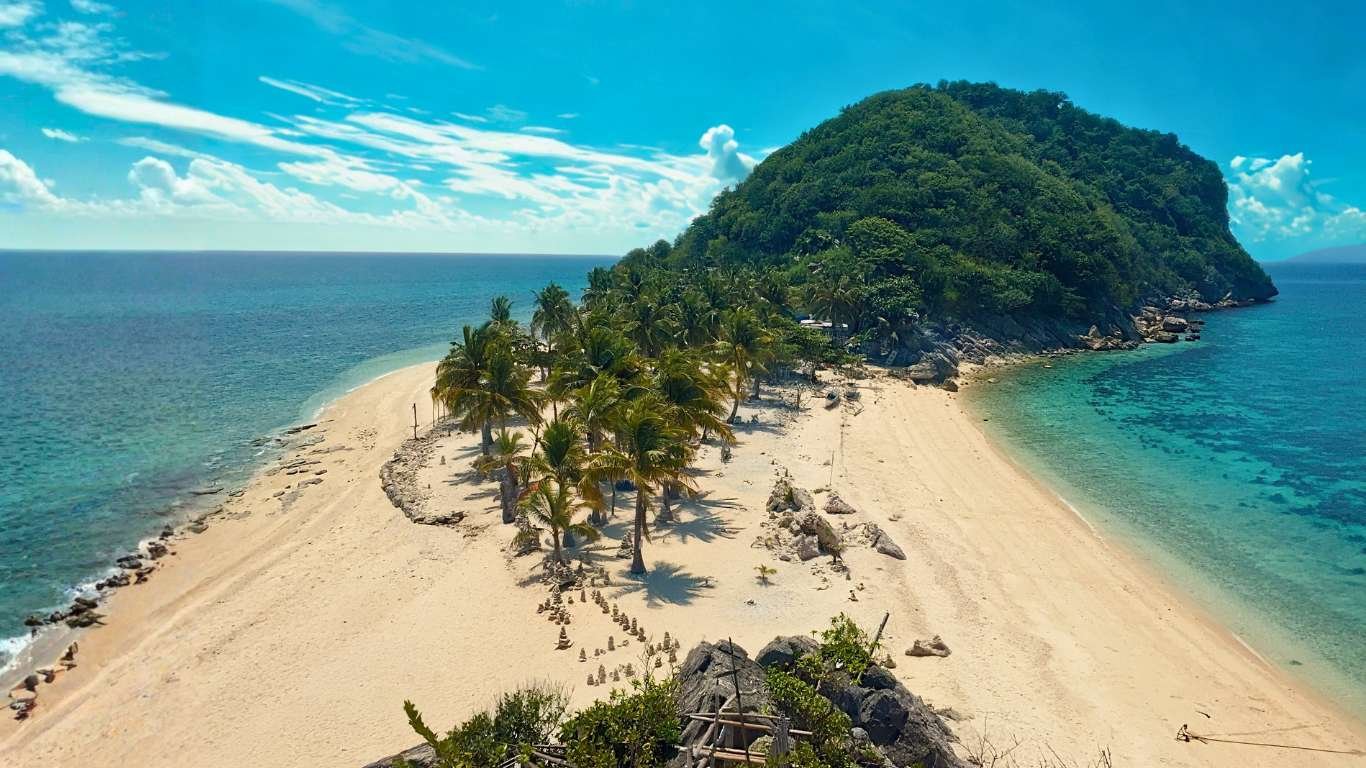
Cabugao Gamay, for example, is a small island known for its elevated viewpoint. Bantigue Island and Sandbar is another separate stop whose exposed sand changes with the tide. Ojatras Island, identified in official tourism materials as Pulupandan, is a small islet that may appear on selected routes. Tangke Lagoon is associated with Gigantes Sur, while the Century-Old Lighthouse is connected with Gigantes Norte.
This dispersed geography explains why sightseeing depends on boats. Travelers cannot simply check in at one resort and walk or drive to every attraction. Moving between island clusters takes time, and the route can change with wind, waves, tide, daylight, crowding, access restrictions, and maritime clearance.
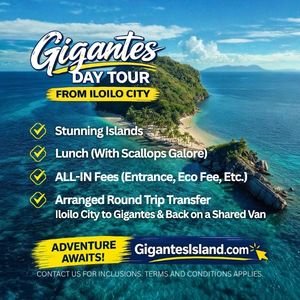
Tour names such as Tour A, Tour B, private tour, shared tour, or combined Sicogon route are defined by individual operators. They are not standardized official itineraries. A package must therefore be judged by its written stop list, boat arrangement, duration, meal, fees, and policies—not only by the tour label.
For a broader explanation of the area’s geography and commonly used names, read the Islas de Gigantes guide.
Choosing a Day Tour or Overnight Stay Based on Time and Comfort
A day tour and an overnight stay provide different experiences. Neither is automatically better for every traveler. The right choice depends on available time, tolerance for long transfers, preferred comfort level, interest in community life, and willingness to plan around boat schedules and limited utilities.
What to Expect From an Isla Gigantes Day Tour
A day tour is designed to cover several attractions within a limited operating window. The schedule normally includes tourism registration, briefing, boarding, boat travel between stops, lunch, swimming or sightseeing time, and the return to port. Travelers who begin in Iloilo City may also spend several hours on the road before and after the boat tour.
Day tours are practical for visitors who:
- Have limited time in Iloilo
- Prefer to sleep in mainland Carles or Iloilo City
- Want to see several signature attractions in one trip
- Do not need an extended stay in an island community
- Are comfortable with a full and possibly tiring schedule
A day tour usually prioritizes several shorter stops rather than long stays at one beach. The number of places listed in an advertisement does not show how relaxed the itinerary will feel. Registration, loading, inter-island travel, lunch, and boarding all consume time. A shorter route with well-spaced stops may provide a better experience than an overloaded itinerary.
Travelers joining a Gigantes Island day tour should ask what happens if the route is shortened after departure. Written policies should distinguish a cancellation before service begins from a safety-driven change after the boat has already operated.
What to Expect From an Overnight Island Stay
An overnight stay gives visitors more time within an island community and reduces the pressure to return to mainland Carles on the same afternoon. It may also make it easier to include land attractions, local meals, quiet evenings, or a slower morning departure.
However, staying overnight does not automatically include a full island-hopping tour. The room, passenger transfer, meals, and tour may be separate services. Travelers should confirm each item independently.
An overnight stay requires advance planning for:
- Boat transportation to and from the accommodation
- Check-in and checkout times
- Breakfast, lunch, dinner, and dietary needs
- Electricity or generator hours
- Freshwater supply and bathroom arrangements
- Mobile signal and internet availability
- Large-luggage handling
- Weather-related transfer changes
Island accommodations may offer simpler rooms and fewer services than large urban hotels. Air-conditioning, hot water, private bathrooms, uninterrupted electricity, strong Wi-Fi, and card payment should never be assumed. Ask direct questions before paying and request written confirmation of the room type and included services.
| Travel Style | Advantages | Main Planning Concerns |
|---|---|---|
| Day tour | Several attractions without an island overnight stay | Long schedule, limited time per stop, road transfers, weather delays |
| Overnight on mainland Carles | Easier early port reporting and better access to supplies | Prearranged transport to Bancal and secure luggage storage |
| Overnight on Gigantes Norte or Sur | More time in an island community | Boat transfers, meals, utilities, medical access, and weather changes |
Matching Accommodation Location With the Correct Boat Transfer
Accommodation location is one of the most important decisions in an Isla Gigantes trip. A room on mainland Carles does not require the same transfer as a room on Gigantes Norte, Gigantes Sur, or Sicogon. Booking by price or photographs alone can create serious logistical problems if the property is reached through a different landing point or boat arrangement.
Before reserving a room, request the following:
- Complete property name and barangay
- Exact island or mainland location
- Shareable map pin or landing-point description
- Name of the passenger or charter boat used
- Departure time and reporting point
- Boat fare and whether it is included
- Luggage allowance and handling procedure
- Late-arrival plan if the road or boat is delayed
- Weather policy for cancelled transfers
Do not assume that a resort booking includes transportation. Likewise, do not assume that a room package includes island hopping. The accommodation and tour may be operated by different businesses, with separate payment and cancellation terms.
Mainland Carles is generally more convenient for travelers who need pharmacies, shops, local transport, or a predictable early departure. Island stays are better suited to guests who accept simpler services and want additional time within the destination. Compare the options in the Gigantes Island hotels guide before selecting a base.
Bancal Port, Tourism Procedures, and Authorized Island Travel
Bancal Port in Barangay Bancal, Carles, is the official entrance and exit point and gateway to the municipality’s island destinations under Municipal Ordinance No. 2016-03. Visitors normally complete the current tourism procedures through the Bancal Tourism Office before authorized island travel.
The Tourism Pass is issued through the tourism office for entry to designated tourist attractions. Depending on the trip, guests may also need to submit passenger information, settle documented charges, attend a safety briefing, and wait for the operator’s boarding instructions and maritime clearance.
Arrival at Bancal does not guarantee an immediate departure. Wind, waves, tides, visibility, vessel availability, passenger coordination, daylight, and Coast Guard advisories can delay or cancel a trip. A sunny sky over the mainland is not proof that the full route is safe.
Travelers should use only currently accredited, recognized, and authorized providers. Any directory dated September 1, 2025 should be treated as a historical reference that requires present-day verification. Ask for the registered business name, actual tour operator, boat operator, meeting point, inclusions, exclusions, payment terms, and weather policy before paying.
The Bancal Port guide provides more detailed information about registration, passenger details, luggage, boarding, and departure conditions.
Wet Landings, Mobility Needs, and Boat Boarding
Some Isla Gigantes landings require passengers to step into shallow water, move between the boat and an uneven shore, cross a narrow boarding area, or walk over wet sand and rocks. Boarding conditions can change with the tide, vessel position, crowding, and wave action.
Secure sandals or water shoes are more practical than loose slippers. Strapped footwear provides better control when stepping down from a boat, walking through shallow water, or crossing slippery surfaces. Keep both hands free while boarding and accept assistance from the crew when offered.
Travelers with limited mobility, balance concerns, knee problems, pregnancy, or other medical conditions should disclose their needs before booking. The operator should explain:
- How passengers board at Bancal
- Whether beach landings are expected
- Whether ladders, wet rocks, or steep steps are involved
- Which attractions can be skipped safely
- Who assists guests who remain on the boat
- Whether a smaller or more suitable route is available
Private service does not guarantee easier access to every attraction. A closed lagoon, rough landing, steep viewpoint, or unsafe cave should remain off-limits regardless of the price paid for the boat.
Medicine, First Aid, and Limited Island Facilities
Medical facilities and pharmacies on the islands are limited compared with mainland Carles, Iloilo City, or Roxas City. Travelers should bring personal medicines, basic first-aid supplies, and any medically necessary food or equipment.
Prescription medicine should be carried in a waterproof pouch that stays with the traveler. Bring enough for the planned trip plus a reserve in case weather delays the return. Do not place all medicine inside a large suitcase that will be stored in a vehicle or transferred separately.
A practical medical kit may include:
- Maintenance and prescription medicine
- Motion-sickness medicine normally used by the traveler
- Adhesive bandages and basic wound-care items
- Oral rehydration supplies
- Any required allergy medication
- Personal medical information and emergency contacts
Travelers with serious allergies should notify the operator before meals are prepared. Seafood, broths, sauces, and shared cooking equipment may create allergy risks. Vegetarian, religious, or medically required meals should also be requested during booking because last-minute replacements may be difficult in remote areas.
Official Attraction Names and Route Variations
Using the correct attraction names helps travelers compare packages and avoid confusion. Official tourism materials identify destinations such as Antonia Point, Ojatras Island (Pulupandan), and Tinagong Bay-Bay (Dakong Bay-Bay). Tour sellers and travelers may use common variations such as Antonia Beach, Pulo Pandan, or Hidden Beach.
These naming variations should be acknowledged, but no single itinerary is guaranteed to visit every destination. Possible routes may include:
- Cabugao Gamay Island
- Cabugao Dako Island
- Bantigue Island and Sandbar
- Tangke Lagoon
- Antonia Point
- Ojatras Island (Pulupandan)
- Mini Boracay (Calumpang)
- Tinagong Bay-Bay (Dakong Bay-Bay)
- Century-Old Lighthouse
Sicogon Island, Tumaquin Islet, Mt. Opao, and Sicogon’s Lagoon Eco-Trail belong to the broader official destination framework but generally require a different or wider route. They should not be assumed to be included in a standard Isla Gigantes day tour.
The captain and authorized guide may change the stop sequence or remove destinations because of tide, wind, waves, daylight, crowding, trail conditions, private-property rules, or official instructions. Review the Gigantes Island attractions guide for more information about access and physical difficulty.
Responsible Visitor Conduct in Isla Gigantes
The islands are living communities and sensitive coastal environments, not a purpose-built recreational park. Visitors share beaches, paths, landings, and waters with residents, fishers, boat crews, and wildlife.
Ask permission before photographing residents, homes, children, or fishing activities. Keep clear of nets, ropes, engines, boats, and work areas. Follow quiet hours during overnight stays and do not enter private property without permission.
Municipal rules prohibit removing sand, pebbles, rocks, shells, coral, plants, wildlife, and other natural resources. Even apparently empty shells should remain where they are. Carry all waste back to the boat and avoid leaving disposable packaging at small islands with limited waste services.
Inside caves and limestone areas, stay on approved routes, avoid touching formations, keep noise low, and do not disturb bats or other wildlife. At beaches and snorkeling areas, never stand on coral, chase marine animals, or swim outside the boundary set by the crew.
Isla Gigantes Pre-Booking Checklist
- Choose between a day tour and overnight stay based on time and comfort.
- Confirm whether the room is on mainland Carles, Gigantes Norte, Gigantes Sur, or Sicogon.
- Obtain written boat-transfer and luggage details.
- Verify the current operating provider before paying.
- Review the itinerary, meal, fees, cancellation terms, and weather policy.
- Bring sufficient cash because electronic payment may be unreliable.
- Pack medicine, water, sun protection, and a dry change of clothes.
- Use strapped sandals or water shoes for wet landings.
- Save maps, contacts, and booking records offline.
- Accept route changes made for safety.
- Respect local communities and leave natural resources untouched.
Book your Isla Gigantes island-hopping experience at GigantesIsland.com/book, or visit GigantesIsland.com/frequently-asked-questions to learn more about tours, transfers, accommodations, weather, and responsible island travel.
