
(*) Sicogon Island Travel Guide: Beaches, Mt. Opao, Tumaquin, and Combined Tours
Explore Sicogon Island in Carles, Iloilo, with practical guidance on beaches, barangays, Mt. Opao, Tumaquin Islet, accommodations, and combined tours.
[ADS]
* Book Now, Pay Reservation Later, Balance on Your Tour Date. Terms and Conditions Apply. Subject to Availability.
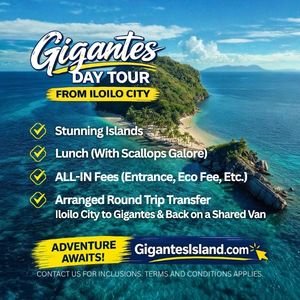
Sicogon Island is an inhabited island destination in Carles, Iloilo, positioned between the Gigantes group and the islands of Concepcion. It offers a different experience from a standard Gigantes island-hopping route, combining beaches, local communities, mountain scenery, nature trails, and resort-managed areas. Some operators offer combined Gigantes–Sicogon day tours on selected dates, usually subject to minimum passenger requirements, favorable sea conditions, and current access arrangements.
Because a combined route covers a wider marine area, departure may be earlier and the number of attractions may be adjusted to keep the trip within safe operating hours. Travelers should book ahead through GigantesIsland.com or another verified provider and request the exact Sicogon stops, meal arrangements, fees, operating boat, departure point, and expected return plan in writing.
The island is composed of the barangays of Alipata, Buaya, and San Fernando. These areas are not one compact tourism zone, so the correct landing point matters. A booking that says only “Sicogon” is incomplete unless it also identifies the barangay, beach, resort, trail, or transfer point involved.
Where Sicogon Sits Between Gigantes and the Islands of Concepcion
Sicogon forms part of the Municipality of Carles in northern Iloilo. Its location makes it a possible extension to a Gigantes itinerary, but it should not be treated as a quick neighboring beach that can be added without affecting travel time. Reaching Sicogon from Bancal or from the Gigantes route involves additional boat movement across open water.
A standard Gigantes tour may concentrate on attractions such as Cabugao Gamay Island, Bantigue Island and Sandbar, Tangke Lagoon, Antonia Point, or Ojatras Island (Pulupandan). A combined Sicogon route extends beyond those clusters and may include a Sicogon beach, Tumaquin Islet, a resort-managed area, or another specifically listed destination.
The wider distance means that a combined itinerary may:
- Require an earlier reporting and departure time
- Spend more time on the boat
- Include fewer Gigantes stops
- Depend on minimum shared-tour participation
- Return later than a shorter island-hopping route
- Change more significantly when sea conditions deteriorate
Travelers should compare the actual stop list rather than assuming that “Gigantes–Sicogon” means every major attraction in both areas. A realistic package may include a carefully selected group of stops instead of an overloaded itinerary.
For more information about the wider product, review the Sicogon day tour from Carles guide before booking.
Official Carles Tourism Destinations Connected With Sicogon
The official Carles Tourism destination framework includes several attractions associated with Sicogon:
- Sicogon Island
- Tumaquin Islet
- Mt. Opao
- Sicogon’s Lagoon Eco-Trail
These places should not be presented as automatic inclusions in every combined tour. Each attraction has different access requirements. A beach stop may be possible during a day tour, while Mt. Opao requires a guided hike, suitable weather, adequate time, and a physically prepared group. Resort-managed areas may also have separate day-use rules, fees, or reservation requirements.
The captain and authorized guide may remove or reorder stops because of wind, waves, tide, daylight, crowding, trail conditions, resort policies, or maritime clearance. Private service does not guarantee entry to an unsafe or restricted destination.
Alipata, Buaya, and San Fernando: Choosing the Correct Landing Point
Sicogon Island consists of three barangays: Alipata, Buaya, and San Fernando. Travelers should identify the correct barangay before booking accommodation, a boat transfer, or a day visit because beaches, trails, communities, and pickup points are dispersed around the island.
| Booking Detail | Why It Matters |
|---|---|
| Exact barangay | Prevents arrival at the wrong side or landing area of the island. |
| Beach or resort name | Clarifies whether the destination is public, community-based, or privately managed. |
| Landing point | Determines where the boat can safely unload passengers and luggage. |
| On-island transport | Shows whether another vehicle, walk, or arranged pickup is needed after arrival. |
| Return arrangement | Confirms where and when the guest must meet the boat. |
A map pin alone may not show the correct shoreline entrance or landing area. Ask the property or operator for a shareable location pin, a landing-point description, and the name of the person responsible for meeting arriving guests.
Travelers staying overnight should also confirm whether the boat transfer is included in the room rate. A resort reservation and passenger transfer are separate products unless combined explicitly in writing.
Mt. Opao Hiking Requirements, Local Guides, and Weather Limits
Mt. Opao is a mountain attraction on Sicogon and should be treated as a real hiking destination rather than a casual photo stop. The climb requires more time, physical effort, and preparation than visiting a beach or resort area.
Visitors should arrange a knowledgeable local guide and confirm current trail access before traveling. Starting early helps reduce exposure to the strongest heat and provides more daylight for the ascent and return.
What to Confirm Before Hiking Mt. Opao
- Current trail status and access permission
- Required guide or local coordination
- Starting point and expected duration
- Physical difficulty on the travel date
- Weather and recent rainfall
- Water and food requirements
- Footwear and equipment
- Emergency and evacuation procedure
Trail difficulty can change after rain. Mud, slippery ground, heat, poor visibility, or unstable weather may make the climb unsuitable even when boats are still operating. Travelers should accept a cancellation or shortened hike when the guide determines that conditions are unsafe.
Carry adequate drinking water and wear closed or securely fastened footwear with good grip. A light day bag is preferable to a large backpack. Sun protection, a hat that can be secured, and light rain protection are also useful.
Guests with limited mobility, heart conditions, balance concerns, or other medical issues should discuss the route before booking. The package should state whether an alternative activity is available for travelers who do not join the hike.
Tumaquin Islet Access, Tides, Currents, and Safe Local Guidance
Tumaquin Islet is one of the official destinations associated with Sicogon. It may appear close to the main island, and shallow water may be visible between the two areas under certain tidal conditions. However, visitors should not attempt an independent crossing.
Safe access depends on:
- Tide level
- Water depth
- Current strength
- Wave direction
- Weather
- Time available before the tide changes
- Local access rules
A crossing that appears exposed at low tide may be covered later. Currents can also strengthen as water moves through the shallow area. Travelers should follow the instructions of an authorized local guide, boat crew, resort representative, or community contact familiar with current conditions.
Do not assume that the return path will remain visible simply because the approach was easy. A local guide should decide whether the visit proceeds and when the group must return.
Wear secure water shoes or strapped sandals because shells, stones, sea grass, coral fragments, or uneven ground may be present. Keep electronics and travel documents in waterproof storage.
Resort Areas, Beaches, and Day-Visitor Access Checks
Sicogon includes local communities as well as resort-managed areas. A visitor should confirm which beaches, facilities, trails, restaurants, toilets, and transport services are open to day guests before adding them to an itinerary.
A boat landing near a beach does not automatically include access to a resort’s private or managed facilities. Day-use fees, meal reservations, advance approval, or property rules may apply.
Questions for a Resort or Day-Visit Stop
- Are day visitors currently accepted?
- Is advance reservation required?
- What entrance or day-use fee applies?
- Are meals or drinks included?
- Can visitors use toilets, showers, or changing areas?
- Is swimming permitted at the expected arrival time?
- Are there marked swimming areas or lifeguards?
- What is the required departure time?
Beachfront access does not guarantee safe swimming throughout the day. Tides, currents, rocky sections, boat lanes, and weather may affect the shoreline. Follow local instructions and avoid swimming near moving vessels or working boats.
Using the September 2025 Accommodation Directory Responsibly
The Carles Tourism Office guide dated September 1, 2025 listed Huni Sicogon and Balay Kogon in Barangay Buaya as accommodation references. This dated directory should not be treated as proof that either property remains accredited, available, open, or operational for a later travel date.
Before booking, reverify:
- Current operating status
- Accreditation or recognition where applicable
- Room availability
- Exact location and landing point
- Boat-transfer arrangements
- Meal and utility details
- Weather-related cancellation terms
Travelers should not describe a property as the “best” or currently accredited without current documentation. A historical listing is only a starting point for verification.
For broader accommodation planning across Carles, compare the Gigantes Island hotels and island stays guide.
Sicogon’s Lagoon Eco-Trail and Nature Access
Sicogon’s Lagoon Eco-Trail is another destination identified in the official Carles Tourism framework. Access, operating schedules, fees, guide requirements, and permitted areas should be confirmed before travel.
A nature trail may be affected by rain, mud, insects, water level, vegetation, maintenance, or temporary closure. Wear suitable footwear, carry water, and follow the approved route. Do not create new paths, enter restricted vegetation, remove plants, or disturb wildlife.
Facilities should not be assumed. Ask whether toilets, shaded rest areas, drinking water, or food are available near the trail. Carry essential supplies without bringing unnecessary single-use packaging.
Combined Gigantes–Sicogon Day Tour Planning
A combined tour is best suited to travelers comfortable with a longer day on the water. It may involve stronger sun exposure, more sea spray, increased boat motion, and a later return than a standard Gigantes route.
Written Details to Obtain Before Paying
- Actual operating provider
- Departure port and reporting time
- Minimum passenger requirement
- Exact Gigantes and Sicogon stops
- Boat type and passenger capacity
- Life-jacket provision
- Meal and drinking-water arrangements
- Entrance, resort, and environmental fees
- Expected return time
- Cancellation, refund, and weather terms
Tour A, Tour B, and Sicogon–Gigantes routes are operator-defined. The route should use clear attraction names and explain which stops are landings, hikes, resort visits, or scenic pass-bys.
The captain has final authority over the safe route. A stop may be removed when waves, wind, tide, visibility, daylight, crowding, or access rules make it unsuitable.
Responsible Travel in Sicogon Communities and Natural Areas
Sicogon is an inhabited island where residents live, fish, travel, and work. Guests should respect homes, working boats, local paths, farms, and private property. Ask permission before photographing residents, children, homes, or fishing activities.
Visitors must not remove sand, shells, coral, rocks, plants, wildlife, or other natural resources. Carry all waste back to an appropriate disposal point and avoid leaving food packaging, bottles, or disposable items on beaches and trails.
At swimming and snorkeling areas, do not stand on coral, chase marine wildlife, or enter the water without informing the guide. At mountain and eco-trail locations, stay on approved paths and avoid disturbing vegetation or animals.
Sicogon Island Pre-Booking Checklist
- Confirm whether the trip is Sicogon-only or combined with Gigantes.
- Identify the exact barangay and landing point.
- Verify the current operating provider.
- Ask which beaches, resort areas, trails, and facilities are open.
- Arrange a local guide for Mt. Opao.
- Use local guidance for Tumaquin Islet access.
- Check fees, meals, drinking water, and return transportation.
- Bring cash, medicine, sun protection, and waterproof storage.
- Avoid fixed evening flights, ferries, or appointments after the tour.
- Accept route changes made for safety.
- Respect local communities and leave natural resources untouched.
Book your Sicogon and Gigantes Island hopping experience at GigantesIsland.com/book, or visit GigantesIsland.com/frequently-asked-questions to learn more.
