
(*) Cabugao Gamay Island Guide: Viewpoint, Photos, Swimming, and Safety
Plan your Cabugao Gamay visit with guidance on the famous viewpoint, safe climbing, crowd management, swimming areas, photography, and conservation.
[ADS]
* Book Now, Pay Reservation Later, Balance on Your Tour Date. Terms and Conditions Apply. Subject to Availability.
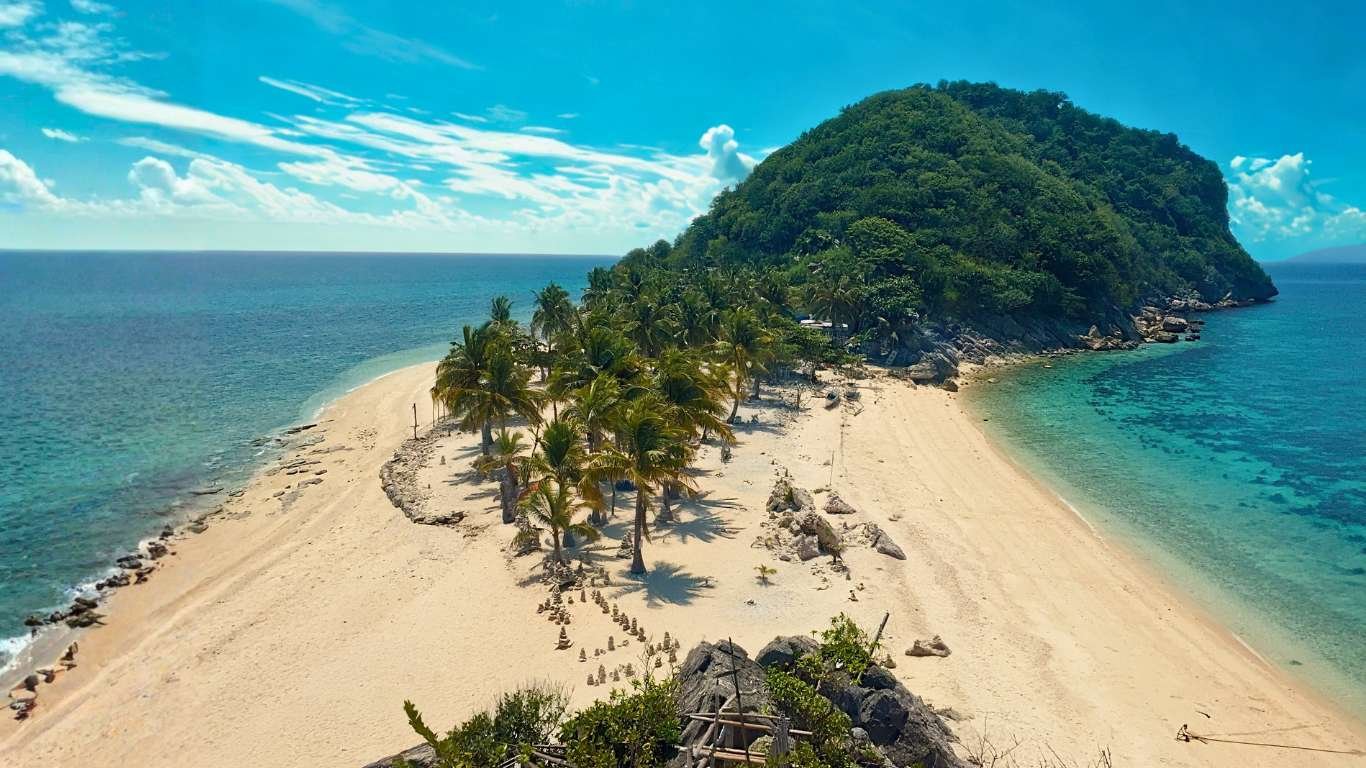
Cabugao Gamay is the best-known photographic landmark of the Gigantes group. The small island is recognized for its narrow central beach, limestone-covered ends, coconut trees, and elevated viewpoint overlooking both sides of the shoreline and the surrounding sea. The official Carles Tourism display calls it the “selfie island” and highlights the panoramic view from its raised photo platform.
The island’s international visibility grew after it appeared in a 2016 Forbes article featuring a Beautiful Destinations selection of scenic places. This was a 2016 feature, not a 2014 ranking. Since then, the familiar viewpoint photograph has become one of the images most strongly associated with Gigantes and Iloilo tourism.
Despite its popularity, access is never guaranteed. Weather, tides, crowd levels, boat traffic, maritime restrictions, and the captain’s schedule can affect whether the group lands, how long visitors remain, and whether swimming or viewpoint access is permitted.
Bakwitan Cave Guide: Trail Difficulty, Local Guides, and Cave Safety
Balbagon Island Guide: Alternative Routes, Landings, and Open-Shore Safety
(*) Bantigue Sandbar Guide: Tides, Boat Landings, Photos, and Visitor Safety
Gigantes Sur 360 Viewpoint Guide: Trail Conditions, Views, and Climb Safety
North Gigantes Island Lighthouse Guide: 1895 Heritage Site and Coastal Views
Tangke Saltwater Lagoon Guide: Tides, Karst Scenery, Access, and Safety
Lantangan Beach Guide: Lunch Stops, Community Etiquette, and Facilities
Cabugao Dako Island Guide: Beach Conditions, Landings, and Tour Inclusion
Pulo Pandan Guide: Ojatras Island, Pulupandan, and Safe Islet Visits
Pahuwayan Landscape Guide: Gigantes Sur Views, Trails, and Visitor Etiquette
The “Selfie Island” Viewpoint and Its 2016 International Feature
The elevated viewpoint is the defining experience at Cabugao Gamay. From the platform, visitors can look down over the narrow beach and see water on both sides of the island. The viewpoint also provides a wider perspective of nearby islands, passing boats, and the surrounding seascape.
The well-known image is often photographed from a raised area near one limestone end of the island. Visitors should not assume that the viewpoint will look exactly like promotional photographs. Lighting, tide level, beach width, vegetation, cloud cover, boat positions, and visitor volume vary throughout the day.
The 2016 Forbes feature helped introduce the island to a wider international audience through a Beautiful Destinations selection. It should be described as a feature highlighting scenic places rather than as an official tourism ranking or competition result.
Cabugao Gamay is one of the destinations commonly included in marine-focused tours, but Tour A, Tour B, and similar package names are not standardized official routes. Travelers should request the exact itinerary and confirm whether the island is planned as a landing, a viewpoint stop, a beach visit, or an alternative subject to conditions.
Compare route inclusions and boat arrangements through the Gigantes Island tour guide.
What to Expect When the Boat Arrives
Landing conditions depend on tide, water depth, waves, and the position assigned to the boat. Passengers may step directly onto the beach or enter shallow water before reaching dry sand.
The boat can move as passengers stand, shift their weight, or approach the exit. Wait for crew instructions and avoid rushing toward the landing area.
Safer Landing Practices
- Secure phones, cameras, hats, and loose belongings before standing.
- Place documents and valuables in waterproof storage.
- Keep both hands available during the transfer.
- Use handholds and accept crew assistance.
- Step only where the crew directs.
- Keep children beside a responsible adult.
- Do not jump from the boat or block the landing area.
Travelers with limited mobility, balance problems, pregnancy, recent injuries, or other health concerns should ask about landing conditions before booking. A private tour may allow more time for assistance, but it cannot remove the physical limitations of a wet or uneven landing.
Managing Crowds in the Narrow Central Area
The central section of the island is narrow. When several tour boats arrive close together, the beach, viewpoint queue, stairs, and boarding area can become congested.
Visitors should follow the guide’s time limits and avoid separating from the group. A shared tour must divide the available time among swimming, photographs, walking, and returning to the boat. Staying too long at one location can delay the remaining itinerary.
Responsible Crowd Behavior
- Keep the beach-to-viewpoint pathway clear.
- Queue in the area identified by the guide.
- Do not stop on the stairs solely to take photographs.
- Prepare the camera before reaching the platform.
- Limit repeated poses when other visitors are waiting.
- Do not push past slower climbers.
- Return to the boat immediately when called.
The best viewpoint experience is not always the longest one. A brief, organized visit allows more travelers to see the view safely without creating unnecessary crowd pressure on the narrow platform.
Narrow Steps, Handrails, and Safe Climbing
The climb to the viewpoint is short, but sections can be steep, hot, crowded, or slippery. Sand carried onto the steps, rain, wet footwear, and repeated visitor traffic can reduce traction.
Use the available handrails and maintain space between yourself and the person ahead. Do not climb while looking continuously at a phone screen. Keep one hand available whenever possible.
| Climbing Condition | Possible Risk | Practical Response |
|---|---|---|
| Wet or sandy steps | Reduced traction and slipping | Move slowly and use the handrail. |
| Crowded queue | Pushing, blocked stairs, or rushed movement | Wait for space and follow the guide’s order. |
| Strong sunlight | Heat, glare, and fatigue | Drink water and avoid unnecessary waiting on exposed steps. |
| Strong wind | Loss of hats, phones, or balance | Secure loose items before climbing. |
| Limited platform space | Congestion near edges and access points | Take photographs efficiently and keep exits clear. |
Visitors who feel dizzy, weak, overheated, or unsteady should skip the climb. The beach can still be enjoyed without reaching the viewpoint. A tour inclusion should never pressure a traveler to attempt an unsuitable physical activity.
Sun, Wind, and Securing Personal Belongings
The viewpoint and central beach are exposed to sun and wind. Shade may be limited, especially when several visitors are waiting near the climbing area.
A sea breeze can make the temperature feel more comfortable than it actually is. Visitors can still experience sunburn, dehydration, headache, or heat exhaustion during a short stop, particularly after spending several hours on an open boat.
Useful Items for the Stop
- Drinking water
- Secure hat or cap
- Sunglasses with a strap
- Appropriate sun protection
- Lightweight cover-up
- Personal medicine
- Waterproof phone pouch
Loose hats can be carried away by strong wind. Phones, action cameras, and small accessories should have secure straps where possible. Do not balance a phone on a railing, rock, stair, or unstable surface.
Tripods and larger photography equipment should not obstruct the stairs, platform, or beach pathway. Ask the guide before setting up equipment in a high-traffic area.
Photography Without Blocking the Viewpoint
The elevated platform is designed for viewing and short photography stops, not extended private photo sessions. Prepare the intended pose and camera settings before reaching the front of the queue.
Visitors should not climb beyond approved barriers, stand on fragile vegetation, or enter restricted limestone areas to obtain a different angle. The recognizable view can be photographed without leaving the designated platform.
Better Viewpoint Etiquette
- Take several efficient photographs rather than a lengthy sequence.
- Allow companions to photograph each other quickly.
- Keep the stair entrance and exit open.
- Do not ask waiting visitors to remain off the platform for an extended shoot.
- Follow staff or guide instructions during crowd controls.
- Keep drones grounded unless current permission and safety rules allow operation.
Drone transport permission does not automatically authorize flying on the island. Aviation rules, local restrictions, crowd safety, privacy, weather, and property-management requirements still apply.
Guide-Approved Swimming Areas
Swimming at Cabugao Gamay should be limited to the area approved by the guide or boat crew. Conditions differ around the island, and not every shoreline section is equally suitable.
Possible hazards include:
- Boat traffic near landing areas
- Changing water depth
- Rocky or uneven sections
- Current moving around the island
- Waves created by passing boats
- Restricted or unsuitable swimming zones
Non-swimmers should keep a properly fitted life jacket on near the water. Children require correctly sized flotation equipment and continuous adult supervision.
Do not swim behind a boat, approach an operating engine, or cross an area used by arriving vessels. Return to shore immediately when instructed, even when the planned swimming time appears unfinished.
For wider guidance on boat transfers, life jackets, swimming limits, and captain-controlled routes, read the Gigantes Island hopping guide.
Weather, Tides, and Viewing-Time Changes
The captain has final authority over the safe route. The Cabugao Gamay stop may be delayed, shortened, converted into a pass-by, replaced, or cancelled because of:
- Strong wind or waves
- Thunderstorms or poor visibility
- Unsafe landing conditions
- High passenger congestion
- Boat traffic
- Maritime advisories
- Insufficient daylight
- Passenger health or safety concerns
A private boat offers more control over pacing than a shared tour, but it does not guarantee access or unlimited viewing time. Every operator must still follow safety requirements and current local arrangements.
Travelers should review the provider’s written route-change, cancellation, and shortened-tour policy before paying. Photographic access should never take priority over safe boat operations.
Keeping the Beach and Vegetation Intact
The island’s visual appeal depends on keeping its sand, vegetation, rocks, and surrounding water undisturbed. Visitors should remain within approved walking areas and avoid trampling plants to create a new photo angle.
Municipal Ordinance No. 2019-03, Section 84 prohibits the collection, extraction, or use of sand, pebbles, rocks, shells, and other natural resources of Carles.
Visitors Must Not Remove
- Sand
- Shells
- Stones or pebbles
- Coral fragments
- Plants or leaves
- Wildlife or marine organisms
- Any other natural material
A shell that appears empty may still serve as habitat. Coral fragments remain part of the coastal environment even when they are no longer attached to a reef. Observe and photograph natural objects without moving them.
Carry all food packaging, bottles, tissues, cigarette waste, and other litter back to the boat. Do not hide waste under vegetation, rocks, or sand.
Respecting Boat Crews and Nearby Communities
Cabugao Gamay is part of a wider working island environment. Tour boats, local crews, vendors, fishers, and residents may use the same shoreline and surrounding waters.
Travelers should avoid blocking boat approaches, touching ropes or fishing equipment, entering private spaces, or using community facilities without permission. Ask before photographing workers, residents, or children.
Follow the instructions of the captain, guide, tourism personnel, and local representatives. Their decisions may be based on tide, crowding, safety, environmental protection, or community operations that are not immediately obvious to visitors.
Cabugao Gamay Visitor Checklist
- Confirm that Cabugao Gamay is listed in the actual itinerary.
- Understand that landing and viewpoint access are not guaranteed.
- Wear secure footwear with reliable grip.
- Use handrails and keep both hands available when climbing.
- Do not stop on narrow steps for photographs.
- Secure phones, cameras, hats, and loose belongings.
- Bring drinking water and sun protection.
- Follow viewpoint time limits and keep pathways clear.
- Swim only in the guide-approved area.
- Keep a life jacket on if you are not a confident swimmer.
- Stay away from boat engines, channels, and rocky sections.
- Carry out every piece of waste.
- Do not collect sand, shells, coral, stones, plants, or wildlife.
- Accept route changes when weather, tides, or safety require them.
Explore the other official stops through the Gigantes Island attractions guide and prepare your full itinerary with the complete Gigantes Island travel guide.
Book your Gigantes Island hopping experience at GigantesIsland.com/book, or visit GigantesIsland.com/frequently-asked-questions to learn more.
