
(*) Gigantes Island Day Tour Guide: Itinerary, Inclusions, and Safety
Plan a Gigantes Island day tour with realistic timing, Bancal registration, route options, inclusions, family safety, packing, and weather policies.
[ADS]
* Book Now, Pay Reservation Later, Balance on Your Tour Date. Terms and Conditions Apply. Subject to Availability.
A Gigantes Island day tour is designed for travelers who want to experience beaches, sandbars, lagoons, limestone scenery, and island communities without staying overnight. Most tours begin through Bancal Port in Carles, Iloilo, and combine several hours of boat travel with attraction stops, lunch, swimming, registration, and boarding procedures.
A day tour should not be judged only by the number of destinations printed in an advertisement. A realistic itinerary must leave enough time for tourism registration, passenger briefing, safe boarding, travel between islands, meals, swimming, photographs, and the return to port. Weather, tides, daylight, crowding, and passenger safety may require the captain or guide to rearrange the route, remove a stop, or return earlier than originally expected.
Before paying, travelers should verify the current operating provider and obtain a written confirmation showing the route, meeting point, boat arrangement, inclusions, exclusions, passenger capacity, payment terms, and weather policy.
Bancal Port as the Official Gateway
Under Municipal Ordinance No. 2016-03, Bancal Port in Barangay Bancal is designated as the official entrance and exit point and gateway to the island destinations of the Municipality of Carles. Visitors normally complete the current tourism procedures through the Bancal Tourism Office before proceeding to authorized attractions.
The Tourism Pass is issued through the Bancal Tourism Office and is required for authorized tourist entry to designated destinations. Depending on the current procedure and package arrangement, travelers may also need to submit passenger details, confirm documented charges, attend a briefing, and wait for boarding instructions and maritime clearance.
Arriving at Bancal does not mean the boat will depart immediately. Registration queues, passenger coordination, vessel preparation, safety checks, weather assessment, and clearance can affect the actual departure time.
Information to Confirm Before Reporting
- Exact Bancal meeting point
- Required reporting time
- Tour coordinator’s name and contact number
- Tourism Pass and registration arrangements
- Actual boat operator
- Expected boat-departure window
- Late-passenger policy
- Weather-update procedure
Read the Bancal Port guide for more information about registration, passenger records, boarding, luggage, and possible departure delays.
How Registration, Boarding, Meals, and Inter-Island Travel Shape the Day
A realistic Gigantes Island day tour includes much more than attraction time. The schedule begins before passengers board and continues after the final sightseeing stop.
| Part of the Tour | What Normally Happens | Possible Timing Variables |
|---|---|---|
| Arrival and registration | Passenger verification, Tourism Pass procedures, fee confirmation, and briefing | Queues, incomplete information, group coordination, and current port procedures |
| Boarding | Life-jacket distribution, luggage placement, passenger seating, and safety instructions | Boat preparation, wet surfaces, children, mobility needs, and loading conditions |
| Inter-island travel | Boat movement between beaches, sandbars, lagoons, and other approved stops | Wind, waves, tides, distance, boat traffic, and route changes |
| Attraction visits | Swimming, photographs, walking, viewpoints, or short community visits | Crowding, tide level, trail condition, access limits, and group pace |
| Meals | Lunch and a rest period at the designated meal location | Serving arrangements, dietary requests, weather, and route sequence |
| Return to Bancal | Final boat crossing, unloading, changing, and onward transport | Sea conditions, daylight, port traffic, and passenger coordination |
A tour promising many stops may provide only a few rushed minutes at each location. Ask how long guests normally spend touring after registration and before the return crossing. A comfortable itinerary allows passengers to board safely, eat properly, and enjoy the approved attractions without pressuring the crew to race against daylight.
Tour A, Tour B, and Sicogon Options Without Guaranteed Stop Lists
Tour A, Tour B, and combined Sicogon–Gigantes are operator-defined package names. They are not standardized official routes, so the same label may refer to different attraction combinations depending on the seller and operating date.
Tour A
Tour A is generally presented as the more marine-focused option. It may combine beaches, a sandbar, a lagoon, swimming areas, and smaller offshore islands. Possible stops include Cabugao Gamay Island, Tangke Lagoon, Bantigue Island and Sandbar, Antonia Point, Ojatras Island (Pulupandan), or Cabugao Dako Island.
Tour B
Tour B may combine marine attractions with selected land stops on Gigantes Sur. Depending on the operator, these may include a viewpoint, farm, community area, or another inland attraction. Travelers should ask about walking distance, steep sections, shade, toilets, and the alternative plan after heavy rain.
Combined Sicogon–Gigantes Tour
A combined route covers a wider part of Carles and may operate only on selected dates or after a minimum number of shared-tour passengers is reached. The wider distance may require an earlier departure, more time on open water, and fewer stops in each area.
Possible Sicogon attractions must be listed specifically. A general Sicogon stop does not automatically include Tumaquin Islet, Mt. Opao, Sicogon’s Lagoon Eco-Trail, a resort-managed beach, or access to private facilities.
Compare route structures through the Gigantes Island tour guide before choosing a package based only on its Tour A, Tour B, or Sicogon label.
The 13 Officially Featured Destinations Are Not a One-Day Promise
The Carles Tourism Office materials feature 13 destinations across the wider Carles island area:
- Tangke Lagoon
- Cabugao Gamay Island
- Cabugao Dako Island
- Bantigue Island and Sandbar
- Antonia Point
- Ojatras Island (Pulupandan)
- Mini Boracay (Calumpang)
- Tinagong Bay-Bay (Dakong Bay-Bay)
- Century-Old Lighthouse
- Sicogon Island
- Tumaquin Islet
- Mt. Opao
- Sicogon’s Lagoon Eco-Trail
This official display presents the broader range of tourism destinations in Carles. It is not a promise that all 13 places can or should be visited during one day.
The destinations are spread across different islands and route clusters. Some require boat landings, while others involve hiking, inland transport, trail access, tide-dependent conditions, or resort coordination. Mt. Opao, for example, is a hiking destination rather than a quick beach stop. The Century-Old Lighthouse is on Gigantes Norte and may require a different land arrangement from a standard marine route.
A responsible provider should advertise a realistic stop list and explain possible substitutions. Use the Gigantes Island attractions guide to compare official names, physical demands, and access considerations.
What a Day-Tour Package Should Include
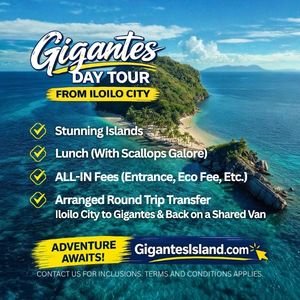
A typical package may include the boat, tour coordinator or guide, lunch, environmental charges, and entrance fees. Transport to Bancal Port may be separate, particularly when the rate is advertised as a port-based package.
Request Written Confirmation of These Items
- Bancal tourism-registration assistance
- Tourism Pass
- Environmental charges
- Entrance fees at listed stops
- Boat service
- Guide or coordinator
- Lunch
- Drinking water
- Life jackets
- Mainland transfer to and from Bancal
- Towels or snorkeling equipment
- Optional-stop charges
Ask whether fees are prepaid or collected separately at individual stops. Carry small-denomination Philippine pesos for legitimate charges that are clearly excluded, but do not pay undocumented fees that were presented as included.
The booking should identify the actual operating tour and boat providers. Use only currently accredited, recognized, and authorized businesses where applicable. An old directory or active social-media page does not by itself prove current authorization.
Swimming Clothes, Towels, Dry Bags, and Limited Changing Facilities
Guests should arrive dressed for swimming or prepared for a quick change. Small beaches, sandbars, and island stops may have limited changing rooms, toilets, freshwater, or private spaces.
Wear quick-drying clothes over swimwear when practical. A large suitcase is unnecessary and difficult to manage on a small boat. Bring a compact day bag containing only essential items.
Recommended Day-Tour Bag
- Towel
- Dry shirt and shorts or trousers
- Secure sandals or water shoes
- Sun protection
- Wind-secured hat
- Light long-sleeved layer
- Drinking water
- Personal medicine
- Small-denomination cash
- Waterproof phone and document protection
Store dry clothes, medicine, electronics, cash, and identification in separate waterproof pouches. Dividing essential items provides additional protection if one part of the bag becomes wet.
Do not depend on towel, dry-bag, or snorkeling-equipment rentals unless the provider confirms their availability in writing.
Safe Boarding, Wet Landings, and Life-Jacket Compliance
Boarding may involve a fixed port area, narrow gangway, beach landing, or wet and uneven surface. Keep both hands free when entering or leaving the boat and follow crew instructions rather than rushing to secure a seat.
Every passenger should receive an appropriate life jacket before departure. Life jackets should remain properly fastened while the boat is underway and whenever the captain or crew requires them.
Ask for the boat’s authorized passenger capacity and the number of expected guests. Overloading should never be accepted. Luggage must not obstruct exits, aisles, or safe passenger movement.
Private service does not remove capacity limits or safety restrictions. The captain may refuse a dangerous landing or change the route even when the group has chartered the entire boat.
Child-Sized Life Jackets, Supervision, and Route Difficulty
Children require properly sized life jackets. An adult-sized jacket may not secure a small child correctly. Parents should confirm the availability of suitable sizes before paying and again before departure.
Children must remain supervised near:
- Boat edges and boarding points
- Open shorelines
- Deep or moving water
- Rocky and slippery areas
- Viewpoints and stairs
- Places without railings or barriers
Parents should ask whether the route includes steep climbs, wet landings, long walks, deep swimming areas, or extended sun exposure. A discounted or free child rate does not remove the need to include the child in passenger-capacity planning, meal arrangements, and the boat manifest.
Young children, older adults, and travelers with mobility limitations may be more comfortable on a route with fewer landings and less climbing. The best itinerary is one suited to the group’s abilities, not necessarily the package with the longest attraction list.
Swimming and Snorkeling Responsibly
Swimming and snorkeling should occur only where the crew permits and where conditions match the traveler’s ability. Notify the guide before entering the water and remain within the approved area.
Do not stand on coral, chase marine animals, feed wildlife, or swim near moving boats. Non-swimmers should wear a life jacket, and children should remain within immediate reach of a responsible adult.
Strong sun exposure is possible on open water because light reflects from the sea. Reapply sun protection, drink water regularly, and inform the guide if dizziness, headache, weakness, or unusual fatigue develops.
Natural-Resource Protection and Visitor Conduct
Municipal rules prohibit the collection, extraction, or use of sand, pebbles, rocks, shells, and other natural resources of Carles. Visitors must not remove coral, plants, wildlife, or natural materials from beaches, lagoons, caves, sandbars, or marine areas.
Responsible visitors should:
- Carry all waste to an appropriate disposal area.
- Stay on approved paths and landing areas.
- Avoid touching limestone formations and coral.
- Keep clear of fishing boats, ropes, nets, and work areas.
- Ask permission before photographing residents or private property.
- Follow the instructions of guides, boat crews, and local authorities.
Take photographs and memories, but leave the destination’s natural materials where they belong.
What Written Policies Should Cover When a Tour Is Shortened or Cancelled
The booking terms should distinguish a cancellation before any service begins from a safety-driven route change after the tour has already started.
| Situation | Policy Question |
|---|---|
| Tour cancelled before departure | Will the guest receive a refund, credit, or rebooking? |
| Mainland transfer completed but boat cancelled | Which services remain chargeable? |
| Boat departs but route is shortened | Is any partial adjustment or alternate stop provided? |
| One attraction becomes inaccessible | Can the captain substitute another safe stop? |
| Shared minimum is not reached | Will the trip move, be refunded, or require a surcharge? |
| Guest reports late | Is the payment forfeited or can the booking be moved? |
A shortened route does not automatically indicate poor service. The captain may need to protect passengers from dangerous waves, an unsafe lagoon entrance, a submerged landing, poor visibility, insufficient daylight, or deteriorating weather.
However, a general substitution clause should not allow a seller to remove major inclusions without explanation. Verbal promises about refunds, credits, or replacement trips should be converted into written terms before payment.
Gigantes Island Day Tour Booking Checklist
- Verify the current tour and boat providers.
- Confirm the exact Bancal meeting point and reporting time.
- Check Tourism Pass and registration arrangements.
- Request the actual route rather than relying on Tour A or Tour B labels.
- Compare realistic touring time, not only the number of attractions.
- Confirm meals, fees, transfers, towels, and equipment.
- Ask about passenger capacity and life-jacket sizes.
- Pack swimwear, a towel, dry clothes, and waterproof storage.
- Review the child, mobility, and health requirements.
- Read the cancellation and shortened-route policy.
- Accept the captain’s final authority over the safe route.
- Leave all natural resources untouched.
Compare available routes and service arrangements through the Gigantes Island tour packages guide.
Book your Gigantes Island hopping experience at GigantesIsland.com/book, or visit GigantesIsland.com/frequently-asked-questions to learn more.
