
(*) Islas de Gigantes Guide: Names, Geography, Official Access, and Island Life
Understand Islas de Gigantes names, island geography, Bancal Port access, official attractions, wildlife protection, and overnight travel conditions.
[ADS]
* Book Now, Pay Reservation Later, Balance on Your Tour Date. Terms and Conditions Apply. Subject to Availability.
Islas de Gigantes is the widely used Spanish-derived name for the group of islands off the coast of Carles in northern Iloilo. Travelers may also encounter the names Gigantes Islands, Isla de Gigantes, Isla Gigantes, or Higantes Group in searches, tour advertisements, and informal conversations. These terms usually point to the same general destination, but they should not be interpreted as separate island resorts or as interchangeable official administrative names.
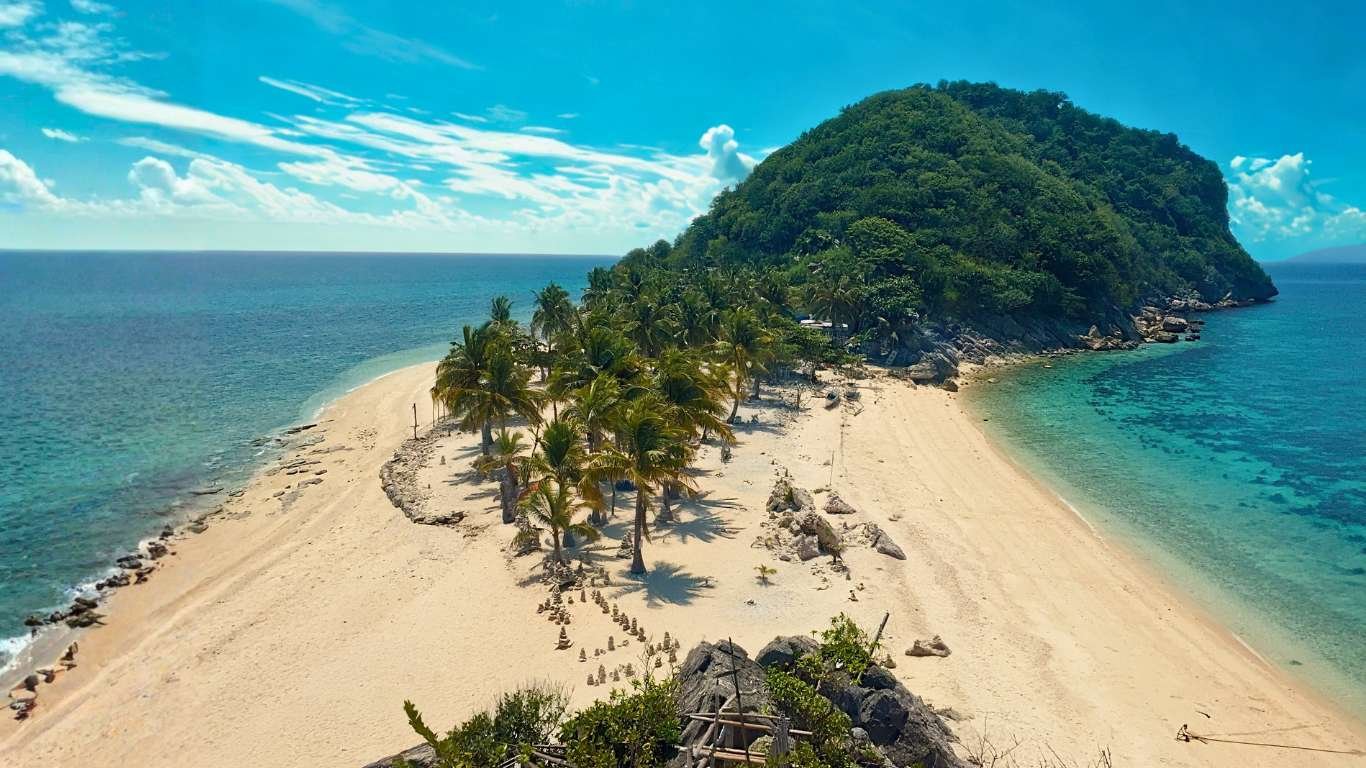
The destination is a dispersed island group made up of inhabited principal islands, smaller offshore islands, beaches, limestone areas, caves, sandbars, lagoons, and fishing communities. Gigantes Norte and Gigantes Sur are the two main inhabited islands, while many of the places seen in travel photographs—such as Cabugao Gamay, Bantigue Island and Sandbar, and Ojatras Island—are separate smaller islands or islets reached by boat.
Understanding this geography helps first-time visitors plan more realistically. There is no single road connecting all the attractions, and no one-day tour can be assumed to visit every destination. Routes depend on the package, tide, wind, waves, daylight, local access, maritime clearance, and the captain’s assessment of safe conditions.
Islas de Gigantes, Gigantes Islands, and Other Common Name Variations
Islas de Gigantes is one of the most familiar names used for the destination. In Spanish, “islas” refers to islands, which appropriately describes the area as an island group rather than one continuous island. English-language travelers commonly use “Gigantes Islands,” while “Isla de Gigantes” and “Isla Gigantes” appear frequently in online searches and travel discussions.
Some local and historical references may use “Higantes,” reflecting Philippine pronunciation or spelling variations. These different names do not necessarily identify different tourism zones. In most travel contexts, they refer broadly to the island destinations administered under the Municipality of Carles.
This naming variation can cause confusion when booking accommodation or transport. A property advertised as being in “Gigantes” may be located on Gigantes Norte, Gigantes Sur, mainland Carles, or even another nearby island included in a broader package. Travelers should always ask for the exact island, barangay, landing point, and boat-transfer arrangement.
Questions to Ask When a Booking Uses Only “Gigantes”
- Is the accommodation on Gigantes Norte, Gigantes Sur, Sicogon, or mainland Carles?
- Which port or beach landing is used?
- Is the boat transfer included in the room or tour price?
- Does the package include island hopping, or only transportation to the accommodation?
- Where will large luggage be stored?
- What happens if weather prevents the scheduled transfer?
A broad destination name is not enough to plan transportation. Exact location matters because moving between islands may require a separate passenger boat, charter, local land transfer, or additional coordination.
Gigantes Norte, Gigantes Sur, and the Smaller Offshore Islets Explained
Gigantes Norte and Gigantes Sur form the main inhabited parts of the destination. They contain island communities, homes, fishing areas, local accommodations, and selected land attractions. Smaller islands and islets are visited through organized boat routes rather than by driving from one attraction to another.
Gigantes Norte is associated with local communities, caves, coastal scenery, and the historic lighthouse area. Gigantes Sur is connected with beaches, Tangke Lagoon, community stops, and operator-defined land attractions such as viewpoints, farms, and trails. The exact places visited depend on the selected itinerary and what is accessible on the travel date.
Several of the destination’s most photographed locations are separate offshore stops. Cabugao Gamay, for example, is a small island known for its elevated viewpoint. Bantigue is a separate island with a tide-shaped sandbar. Ojatras Island, identified in official tourism materials as Pulupandan, is another small islet that may appear in selected tour routes.
This scattered geography is the reason Gigantes Island hopping is primarily a boat-based experience. Time on the water is a meaningful part of the trip, particularly when waves require slower travel or when the route covers attractions in different clusters.
The Official 13-Destination Framework
Carles Tourism Office materials feature the following destinations:
- Tangke Lagoon
- Cabugao Gamay Island
- Cabugao Dako Island
- Bantigue Island and Sandbar
- Antonia Point
- Ojatras Island (Pulupandan)
- Mini Boracay (Calumpang)
- Tinagong Bay-Bay (Dakong Bay-Bay)
- Century-Old Lighthouse
- Sicogon Island
- Tumaquin Islet
- Mt. Opao
- Sicogon’s Lagoon Eco-Trail
This official list is useful for understanding the broader destination area, but it is not a guaranteed one-day checklist. Some places are located around Gigantes, while others are connected with Sicogon. Several require different routes, land transfers, hiking arrangements, resort access, favorable tides, or additional time.
Tour A, Tour B, private tours, shared trips, and combined Sicogon routes are operator-defined products. Their names do not create standardized official itineraries. Always obtain the actual stop list in writing and review the Gigantes Island attractions guide to understand location, access conditions, and physical requirements.
Official Bancal Entry Procedures, Tourism Pass, and Travel Distances
Bancal Port in Barangay Bancal, Carles, is designated under Municipal Ordinance No. 2016-03 as the official entrance and exit point and gateway to the municipality’s island destinations. This centralized “One Entry, One Exit” policy supports tourism registration, visitor monitoring, passenger coordination, and authorized boat movement.
Visitors normally complete the required tourism procedures through the Bancal Tourism Office before proceeding to designated island destinations. The Tourism Pass is issued through the tourism office for authorized tourist entry. Depending on the trip, guests may also need to provide passenger information, confirm fees, attend a briefing, and wait for the operator’s boarding instructions and maritime clearance.
Travelers should arrive at the confirmed meeting point rather than relying only on the general name “Bancal Port.” Registration, waiting, boat loading, and boarding may occur in specific areas identified by the operator. Save the meeting-point image, contact numbers, payment record, and boat information offline before leaving a strong mobile signal area.
| Route | Official Approximate Distance | What Affects Actual Travel |
|---|---|---|
| Iloilo City to Carles | About 146–147 km by road | Traffic, pickup points, road conditions, stops, and vehicle type |
| Roxas City to Carles | About 70 km by road | Transport connections, waiting time, traffic, and final transfer to Bancal |
| Bancal Port to Langub Port, Gigantes Norte | About 18 km by sea | Boat type, loading, wind, waves, routing, and maritime clearance |
These distances should not be presented as guaranteed travel times. A sunny day on the mainland does not mean the entire sea route is calm. Wind, swell, tides, local thunderstorms, visibility, and Coast Guard advisories may affect departures even when conditions appear favorable at the port.
Travelers should reconfirm sea conditions on the morning of departure and accept that the captain, authorized guide, tourism authorities, or safety agencies may reorder, shorten, postpone, or cancel the route. For more detailed arrival guidance, read the Bancal Port registration and boat departure guide.
History, Archaeological Finds, and the Legends of Giants
Local stories about giants form an important part of the identity of Islas de Gigantes. According to local folklore, unusually tall people once lived on the islands, and this tradition is commonly associated with the name Gigantes.
Carles Tourism Office materials also report the discovery of burial and ceremonial jars and three wooden coffins in the islands. One tourism display describes the ceremonial jars as dating to the Metal Age, around 200 BC. Local tradition links the coffins to the legendary giants.
These accounts should be presented carefully. The discovery of archaeological materials and the folklore about giants are not the same type of evidence. The legend is part of local cultural tradition and should not be treated as established archaeological proof that a population of giants lived in the islands.
Visitors who encounter heritage objects, cave sites, old structures, or archaeological areas should not touch, move, mark, or remove anything. Heritage materials belong to the community and should be protected for future study and local interpretation.
Limestone Forests, Caves, Wildlife Habitats, and Low-Impact Exploration
Islas de Gigantes is known for limestone scenery, caves, beaches, lagoons, coastal vegetation, and marine habitats. These environments are attractive to visitors, but they are also vulnerable to damage from careless climbing, litter, noise, unauthorized collection, and disturbance of wildlife.
Visitors should remain on approved paths and enter caves only when local access is permitted and an authorized guide considers conditions safe. Cave interiors may contain bats, insects, nesting animals, sensitive formations, and uneven passages. Excessive noise, smoke, graffiti, touching, or souvenir collection can permanently damage the site.
Limestone surfaces can be sharp, loose, or slippery, especially after rain or near saltwater. Travelers should wear secure footwear and avoid climbing rock walls merely for photographs. Viewpoints, cave approaches, and island trails may be unsuitable for visitors with balance or mobility limitations.
Some habitats support wildlife found only in limited areas. Guests should avoid disturbing nesting birds, cave animals, shoreline organisms, and vegetation. Do not feed wildlife, chase animals for photographs, handle marine life, or enter restricted habitat zones.
Natural Resources Must Remain in Place
Municipal rules prohibit the collection, extraction, or use of sand, pebbles, rocks, shells, and other natural resources of Carles. Visitors must not remove:
- Sand or stones from beaches and sandbars
- Shells, whether occupied or apparently empty
- Coral fragments, living or dead
- Plants, flowers, seeds, or driftwood from protected areas
- Cave formations or archaeological materials
- Wildlife or marine organisms
The correct souvenir is a photograph, a locally made product, or a legally sold item—not part of the natural environment. Carry all waste back to the boat and avoid leaving disposable packaging at small islands where waste collection may be limited.
Community Etiquette in a Lived-In Island Destination
Islas de Gigantes is not an uninhabited resort complex. Local residents live, fish, raise families, operate boats, manage accommodations, prepare meals, and use the same beaches and pathways that tourists visit.
Ask permission before photographing residents, homes, children, fishing activities, or private property. A person working beside a boat or standing near a traditional house is not automatically part of a public photo display. Avoid entering yards, porches, boats, or community facilities without invitation.
Visitors should also respect quiet hours, especially during overnight stays. Loud music, shouting, and late-night gatherings can disturb families and other guests. Follow the accommodation’s rules regarding electricity, water use, meals, waste, and common areas.
Working fishing spaces require extra awareness. Keep clear of nets, ropes, engines, drying areas, boat lanes, and loading points. Do not sit on fishing equipment or reposition objects for photographs. Purchasing meals and legitimate locally made products can support livelihoods, but bargaining aggressively over very small amounts may be disrespectful.
Utilities, Mobile Signal, and Overnight Expectations
Electricity, mobile signal, freshwater supply, and internet access can vary by island and accommodation. Travelers should not assume that every room provides uninterrupted power, strong Wi-Fi, hot water, air-conditioning, or continuous mobile coverage.
Before booking an overnight stay, ask about:
- Electricity and generator hours
- Air-conditioning or fan availability
- Private or shared bathroom arrangements
- Freshwater supply and bathing limitations
- Mobile networks that usually receive signal
- Whether Wi-Fi reaches the room
- Meal schedules and dietary requests
- Boat-transfer times and weather policies
- Emergency contact and medical-access procedures
Download maps, booking records, identification copies, emergency details, and operator contacts before leaving mainland Carles. Cloud-only documents may become inaccessible when the signal weakens. Bring a charged power bank, but remember that electricity may be scheduled and charging opportunities can be limited.
Freshwater is an important island resource. Guests should use water responsibly, turn off taps, avoid unnecessary long showers, and report leaks. Switch off lights, fans, and air-conditioning when not needed, particularly where properties rely on generators or limited power systems.
Travelers requiring reliable internet for work should verify actual network performance rather than depending on a general advertisement stating that Wi-Fi is available. Signal may be stronger in a common area than inside a room, and power interruptions may affect the router.
Practical First-Time Visitor Checklist
- Confirm the exact island, barangay, accommodation, and landing point.
- Verify the actual operating provider before making payment.
- Complete the required tourism procedures through Bancal.
- Carry Philippine pesos because card and mobile payments may be limited.
- Save booking details, maps, contacts, and identification offline.
- Bring medicine, drinking water, sun protection, and a dry change of clothes.
- Use secure footwear suitable for boats, wet landings, and uneven paths.
- Protect phones, cash, and documents in waterproof pouches.
- Respect residents, private property, working fishing areas, and quiet hours.
- Do not remove shells, sand, coral, rocks, plants, or wildlife.
- Keep the itinerary flexible when sea or weather conditions change.
For a broader overview of transport, accommodations, routes, health considerations, and booking checks, read the complete Gigantes Island travel guide.
Book your Islas de Gigantes island-hopping experience at GigantesIsland.com/book, or visit GigantesIsland.com/frequently-asked-questions to learn more about official access, tours, weather, packing, accommodations, and island travel.
