
Antonia Beach and Antonia Point Guide: Rocks, Swimming, Food, and Fees
Plan your Antonia Beach visit with guidance on layered rocks, swimming zones, basic facilities, seafood safety, vendor prices, cash, and possible fees.
[ADS]
* Book Now, Pay Reservation Later, Balance on Your Tour Date. Terms and Conditions Apply. Subject to Availability.
Antonia Beach is the name commonly used by travelers and tour sellers for the destination identified in official Carles Tourism materials as Antonia Point. Unless a local operator specifically distinguishes two separate locations in its itinerary, these names generally refer to the same frequently visited Gigantes stop.
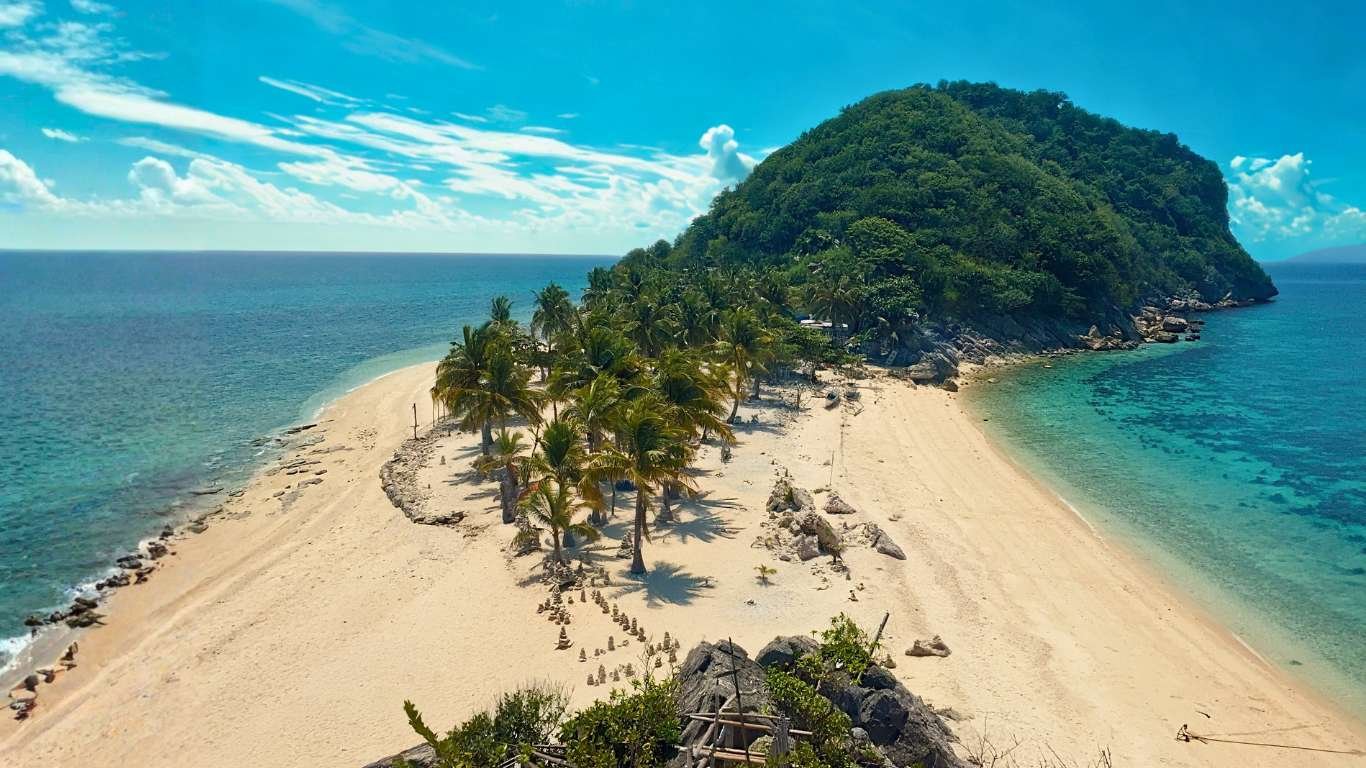
Antonia Point is known for its white-sand shoreline and layered stone formations, which are often compared with stacked boulders or slices of bread. Depending on the operating arrangement, the stop may also be used for swimming, snorkeling, lunch, seafood purchases, or a brief rest between boat transfers.
The experience is not identical on every visit. Waves, tides, rain, boat traffic, vendor operations, crowd levels, and the captain’s route can affect the landing area, available swimming space, stop duration, food service, and recreational activities. Travelers should confirm what is included instead of assuming that every Antonia Beach visit provides the same services.
Why Antonia Point and Antonia Beach Usually Refer to the Same Stop
The official destination name used in Carles Tourism materials is Antonia Point. Antonia Beach has become a widely used tourism and search term because visitors commonly associate the attraction with its sandy shoreline and swimming area.
Using both names helps travelers compare official information with tour advertisements. A written itinerary may list:
- Antonia Point
- Antonia Beach
- Antonia Point Beach
- A beach or meal stop at Antonia
Before paying, ask the tour provider to confirm whether these descriptions refer to the same destination and whether the proposed experience includes a landing, swimming period, meal break, snorkeling opportunity, or only a short stop.
Tour A, Tour B, and private-tour labels are not standardized official itineraries. Antonia may be a principal stop in one package, a lunch location in another, or an alternative when another beach is crowded or unsuitable.
Compare the complete route through the Gigantes Island tour guide rather than relying only on a package name.
White Sand and Layered Stone Formations
Antonia Point’s most distinctive land feature is its series of layered stone formations along the shoreline. Their horizontal shapes create the appearance of stacked slabs, rounded boulders, or thick slices of bread.
These formations provide attractive photography backgrounds, but they are not designed as climbing structures. Sea spray, algae, rain, sand, and wet footwear can make the rocks slippery. Higher sections may also have uneven edges, gaps, or unstable footing.
Safer Photo Behavior Around the Rocks
- Remain on areas approved by the guide.
- Use the lowest stable section rather than climbing higher for a photograph.
- Keep both hands available when stepping between surfaces.
- Do not climb while holding an unsecured phone or camera.
- Keep children within arm’s reach.
- Avoid blocking paths used by other guests.
- Do not jump from the rocks into the water.
Travelers should not recreate risky photographs from old social-media posts. A pose that appears manageable in a still image may have involved slippery footing, changing waves, or an unapproved section.
The rocks should also be left undamaged. Visitors must not scratch names into the surface, break off fragments, move stones, or arrange natural materials as permanent photo props.
Landing Conditions at Antonia Point
The boat may approach a sandy landing, remain in shallow water, or position passengers near another safe access point. The method depends on tide, wave action, water depth, crowding, and the captain’s assessment.
Passengers should remain seated until the crew gives instructions. Standing too early can affect the boat’s balance and create congestion near the exit.
Safer Landing Practices
- Secure cameras, phones, hats, and loose belongings.
- Keep valuables inside waterproof protection.
- Use boat handholds where available.
- Accept crew assistance.
- Step only where instructed.
- Keep children beside a responsible adult.
- Move away from the landing zone before stopping for photographs.
Water shoes or strapped sandals are more practical than loose slippers. A wet landing may involve uneven sand, submerged rocks, shells, or changing water depth.
Travelers with knee, balance, mobility, pregnancy, or other health concerns should disclose these needs before departure. The operator can explain the likely transfer method and whether a particular day’s landing may be unsuitable.
Meal Stops and Rest Periods
Antonia Beach is sometimes used as a lunch or rest stop during a longer island-hopping itinerary. However, this arrangement depends on the package, vendor operations, crowd levels, and current local rules.
A tour that includes lunch should state where the meal will be served and whether it is prepared by the operator, a local vendor, an accommodation, or another supplier. Guests should also ask whether drinking water, utensils, tables, seating, and cleanup are included.
| Meal-Stop Detail | What to Confirm |
|---|---|
| Lunch inclusion | Menu, serving size, drinks, and dietary alternatives |
| Serving location | Beach, shaded area, vendor stall, or another nearby facility |
| Seating | Whether chairs or tables are available and whether charges apply |
| Waiting time | Whether food is prepared in advance or ordered after arrival |
| Outside purchases | Whether seafood, snacks, and drinks are paid separately |
Do not assume that the stop has the same food choices every day. Supply deliveries, weather, visitor volume, and vendor schedules can affect availability.
Basic Facilities, Toilets, and Separate Charges
Facilities at a natural island stop may be basic. Toilets, changing areas, washing facilities, seating, shaded shelters, and freshwater should be confirmed rather than assumed.
Some services may be managed separately from the tour and may require an additional payment. Ask the guide before leaving the boat so you can carry the necessary cash and avoid confusion.
Questions to Ask Before the Stop
- Are toilets available?
- Is there a separate toilet or washing fee?
- Is freshwater available for rinsing?
- Are changing rooms provided?
- Is shaded seating available?
- Can luggage or valuables be stored securely?
- Are food purchases included in the tour price?
Bring tissue, personal toiletries, hand sanitizer, drinking water, and a waterproof pouch. Do not expect city-hotel standards at a beach stop.
Large bags are usually better left securely on the boat when the crew advises it. Carry only essential items such as water, medicine, cash, a towel, and waterproof electronics.
Swimming, Snorkeling, and Life Jackets
Swimming and snorkeling should be limited to the area approved by the guide or boat crew. Antonia’s shoreline can also be used by arriving and departing vessels, so an apparently open swimming area may still form part of a boat approach route.
Conditions may include:
- Changing water depth
- Waves near the shoreline
- Current moving around rocky sections
- Boat engines and propellers
- Submerged stones or coral
- Reduced visibility after rain or wave action
A properly fitted life jacket remains advisable even when the water appears calm. Non-swimmers should keep one fastened near the shoreline, while children require correctly sized flotation equipment and continuous supervision.
Swimming and Snorkeling Rules
- Enter only when the guide approves the area.
- Remain within sight of the boat crew.
- Do not swim behind a vessel.
- Keep away from operating engines and propellers.
- Avoid standing on coral.
- Do not chase or handle marine animals.
- Return immediately when called.
Snorkeling equipment may or may not be included. Ask whether the mask, snorkel, life jacket, guide, and equipment-cleaning arrangements are part of the package.
For broader advice on boat safety, wet landings, swimming areas, and route changes, read the Gigantes Island hopping guide.
Recreational Water Activities
Recreational activities may be offered depending on local authorization, available equipment, weather, sea conditions, staffing, and current operating arrangements. Their availability should never be assumed from an older photograph, review, or advertisement.
Before participating, confirm:
- The activity provider
- The current price
- Required safety equipment
- Age, weight, or health restrictions
- Duration
- Supervision arrangements
- Cancellation rules
Do not participate when the equipment appears damaged, safety instructions are unclear, or the activity is operating outside the area authorized by the guide or responsible local personnel.
Seafood, Snacks, and Vendor Purchases
Small vendors may sell seafood, sea urchin, shellfish, snacks, drinks, or other local items. Availability, serving sizes, preparation methods, and prices vary by date.
Confirm the price before an order is cleaned, opened, cooked, or served. Ask whether the quoted amount applies per piece, per plate, per kilogram, or per serving.
Before Ordering Seafood
- Confirm the exact item and serving size.
- Ask for the total price.
- Check whether preparation or cooking has a separate charge.
- Choose food that appears freshly and hygienically handled.
- Avoid food left exposed for an uncertain period.
- Inform the vendor about serious allergies.
Do not assume that raw seafood is safe simply because it is locally caught. Handling, storage temperature, water quality, freshness, and individual health conditions all affect risk.
Raw Sea Urchin and Shellfish Safety
Raw sea urchin and shellfish can present food-safety and allergy risks. Travelers who are pregnant, immunocompromised, medically vulnerable, or uncertain about raw seafood should choose a safer cooked option or avoid the item.
Shellfish allergies can cause serious reactions. A person allergic to one type of seafood should not experiment during a remote island tour where medical services are limited.
Avoid Eating Seafood When:
- Its freshness is uncertain.
- It has been exposed to heat without proper cooling.
- The preparation area appears unhygienic.
- The smell or appearance seems unusual.
- You have a known seafood allergy.
- You are medically advised to avoid raw food.
Carry personal allergy medicine when prescribed and tell the tour coordinator about any history of severe reactions. Island medical assistance is more limited than services in Iloilo City or Roxas City.
Small-Denomination Cash and Electronic Payments
Carry Philippine pesos in smaller denominations. Vendors may not have enough change for large bills, and electronic payment may fail because of weak signal, account limits, or unavailable mobile data.
Ask about prices before ordering and count the change immediately. Keep only the expected day’s spending money accessible while storing emergency cash separately in waterproof protection.
| Expense | Payment Preparation |
|---|---|
| Seafood or snacks | Confirm price and serving size before preparation. |
| Drinks | Carry smaller notes and coins where practical. |
| Toilet or washing fee | Ask whether a separate charge applies. |
| Optional water activity | Confirm the operator, total rate, and inclusions. |
| Entrance or facility use | Verify whether it is already included in the package. |
Do not give a card, PIN, password, or one-time password to an unknown intermediary. Review the Gigantes cash and ATM guide before traveling to Carles.
Private Areas, Fees, and Local Rules
Parts of the stop or nearby facilities may be community-managed, privately managed, or subject to local operating rules. A boat landing does not automatically provide unlimited access to every structure, seating area, toilet, or vendor facility.
Visitors should follow signs and guide instructions, avoid entering private spaces, and ask before using facilities. Entrance, environmental, day-use, or activity fees should be disclosed before payment whenever possible.
A written package should clarify:
- Whether the Antonia landing fee is included
- Whether toilet or washing charges are separate
- Whether food and drinks are included
- Whether recreational activities require separate payment
- Whether a minimum order applies to seating or facilities
Weather, Waves, and Route Changes
The captain has final authority over the safe route. Antonia Point may be shortened, replaced, converted into a pass-by, or removed from the itinerary when conditions are unsuitable.
Possible reasons include:
- Strong waves or wind
- Thunderstorms or poor visibility
- Unsafe beach landing
- Heavy boat traffic
- Excessive crowding
- Maritime advisories
- Insufficient daylight
- Passenger health or safety concerns
A private boat does not guarantee access when the landing or swimming area is unsafe. Travelers should review the provider’s written route-change, refund, rebooking, and shortened-tour terms before paying.
Protecting the Beach and Marine Environment
Municipal Ordinance No. 2019-03, Section 84 prohibits the collection, extraction, or use of sand, pebbles, rocks, shells, and other natural resources of Carles.
Visitors must not remove or damage:
- Sand
- Shells
- Stones or layered rock fragments
- Coral
- Plants
- Wildlife or marine organisms
- Other natural materials
Do not relocate sea creatures for photographs, stand on coral, carve the rock formations, or leave food packaging behind. Bring all bottles, tissues, wrappers, and other waste back to the boat or place them in a confirmed waste facility.
Respect nearby residents, workers, vendors, fishing activity, and other tour groups. Keep boat approaches, pathways, tables, and shore access clear.
Antonia Beach Visitor Checklist
- Recognize Antonia Point as the official tourism label.
- Confirm whether Antonia Beach refers to the same planned stop.
- Ask whether the visit includes landing, swimming, snorkeling, lunch, or only a short stop.
- Wear strapped footwear suitable for wet surfaces.
- Avoid climbing high or slippery layered rocks.
- Keep children within reach around rocks and boats.
- Swim only in the guide-approved area.
- Use a life jacket when advised, especially for non-swimmers.
- Confirm toilets, seating, washing areas, and separate charges.
- Ask seafood prices and serving sizes before ordering.
- Avoid raw seafood when freshness, hygiene, allergy, or health risks are uncertain.
- Carry small-denomination Philippine pesos.
- Keep cash, phones, and valuables waterproof.
- Carry out all waste.
- Do not remove sand, shells, coral, rocks, plants, or wildlife.
- Accept route changes when waves, weather, or safety require them.
Explore the wider official destination list through the Gigantes Island attractions guide and prepare your complete itinerary with the Gigantes Island travel guide.
Book your Gigantes Island hopping experience at GigantesIsland.com/book, or visit GigantesIsland.com/frequently-asked-questions to learn more.
