
Cabugao Dako Island Guide: Beach Conditions, Landings, and Tour Inclusion
Plan your Cabugao Dako visit with guidance on beach conditions, wet landings, swimming zones, tour inclusion, footwear, and responsible island travel.
[ADS]
* Book Now, Pay Reservation Later, Balance on Your Tour Date. Terms and Conditions Apply. Subject to Availability.
Cabugao Dako is the larger neighboring island associated with Cabugao Gamay in the Gigantes group. In Hiligaynon, dako means big, while gamay means small. These local words help explain the names used for the two islands, but travelers should not assume that a tour including one Cabugao destination automatically includes the other.
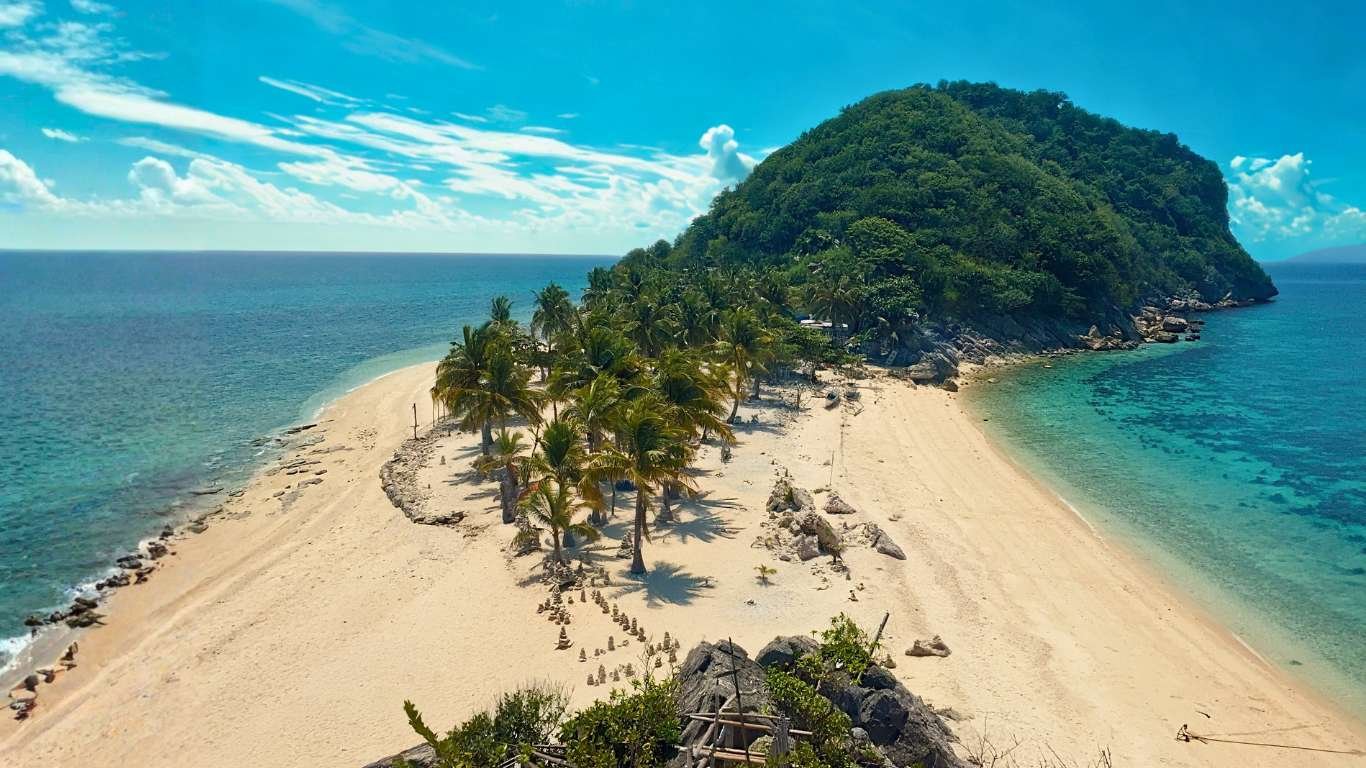
The official Carles Tourism destination display describes Cabugao Dako as having a white-sand beach and clear blue water. Its actual appearance changes with the tide, season, sunlight, weather, waves, and recent sea conditions. Depending on the day’s route, a boat may land on the island, pass nearby, use it as an alternative stop, or skip it when conditions are unsuitable.
Before paying for a package, request the exact stop list and ask how Cabugao Dako will be experienced. A scenic pass-by should not be presented as a complete beach visit, while an alternative stop should be clearly described as subject to the captain’s decision.
Bakwitan Cave Guide: Trail Difficulty, Local Guides, and Cave Safety
(*) Cabugao Gamay Island Guide: Viewpoint, Photos, Swimming, and Safety
Balbagon Island Guide: Alternative Routes, Landings, and Open-Shore Safety
(*) Bantigue Sandbar Guide: Tides, Boat Landings, Photos, and Visitor Safety
Gigantes Sur 360 Viewpoint Guide: Trail Conditions, Views, and Climb Safety
North Gigantes Island Lighthouse Guide: 1895 Heritage Site and Coastal Views
Tangke Saltwater Lagoon Guide: Tides, Karst Scenery, Access, and Safety
Lantangan Beach Guide: Lunch Stops, Community Etiquette, and Facilities
Pulo Pandan Guide: Ojatras Island, Pulupandan, and Safe Islet Visits
Pahuwayan Landscape Guide: Gigantes Sur Views, Trails, and Visitor Etiquette
How Cabugao Dako and Cabugao Gamay Got Their Local Names
The names of the two Cabugao islands reflect their relative sizes. Cabugao Dako is the larger island, while Cabugao Gamay is the smaller one. Visitors unfamiliar with Hiligaynon may see both names in tour advertisements and mistakenly assume that they refer to different parts of the same island.
They are separate destinations. Reaching one does not mean travelers can simply walk to the other. Boat positioning, route timing, tide, and the day’s safety conditions determine whether both can be approached.
| Island | Meaning of the Name | Common Visitor Expectation |
|---|---|---|
| Cabugao Dako | “Dako” means big | Larger island associated with a white-sand beach and blue water |
| Cabugao Gamay | “Gamay” means small | Smaller island known for its elevated viewpoint and signature photographs |
Cabugao Gamay is more commonly used as the recognizable photo landmark because of its elevated viewing area. Cabugao Dako provides a different kind of stop, usually centered more on its shoreline, swimming environment, and island scenery.
Travelers can compare the two through the Cabugao Gamay Island guide and the wider Gigantes Island attractions guide.
White Sand and Blue Water Without Guaranteed Conditions
Cabugao Dako is officially promoted for its white-sand beach and clear blue water, but these qualities should not be treated as fixed conditions. A beach changes continuously according to tide, wind, waves, sediment movement, rainfall, and the season.
On some visits, the sand may appear wide, pale, and dry. On another date, the shoreline may be narrower, wetter, or partly covered by water. Water clarity can also change after rain, stronger waves, boat movement, or suspended sand.
Factors That Affect the Beach Experience
- Tide level at the time of arrival
- Wind and wave direction
- Rainfall before or during the tour
- Boat traffic near the landing zone
- Sunlight and cloud cover
- Seasonal shoreline changes
- Current and water depth
Travel photographs usually show the island under particularly favorable light and sea conditions. Guests should view them as examples rather than guarantees. A cloudy day, higher tide, or rougher sea does not necessarily mean the island has changed permanently; it may simply reflect the natural conditions at that hour.
Confirming Whether Both Cabugao Islands Are Included
Tour A, Tour B, and similar labels are not standardized official itineraries. One operator may list Cabugao Gamay, another may include Cabugao Dako, and another may use one as an alternative when a preferred landing is crowded or unsafe.
Ask for the precise attraction list rather than relying on the phrase “Cabugao Island.” The booking should state whether the package includes:
- Cabugao Gamay only
- Cabugao Dako only
- Both Cabugao islands
- One primary stop with the other as an alternative
- A scenic pass-by without landing
The actual day-of-tour route remains subject to the captain’s final safety decision. Even when both islands appear in a proposed itinerary, weather, sea conditions, tides, crowding, or limited daylight may require a change.
Use the Gigantes Island tour guide to compare route labels, private and shared arrangements, inclusions, and route-change policies.
Wet Landings and Uneven Beach Access
A Cabugao Dako landing may involve stepping directly onto sand, entering shallow water, or moving across a sloping beach. The captain positions the boat according to water depth, tide, waves, and the safest available approach.
Passengers should not stand or move toward the exit until the crew gives instructions. The boat may shift as people change position, and the landing surface may be uneven beneath the water.
Safer Landing Practices
- Keep both hands available while leaving the boat.
- Accept assistance from the crew.
- Step only where instructed.
- Avoid jumping onto the beach.
- Wait until the passenger ahead has cleared the landing area.
- Keep children beside a responsible adult.
- Tell the crew in advance about mobility or balance concerns.
Travelers with limited mobility, recent injuries, pregnancy, or health conditions should ask how deep the water may be during landing. A private boat may allow more time for assistance, but it cannot guarantee a dry or level transfer.
Why Strapped Footwear Is More Practical
Water shoes or strapped sandals are better suited to Cabugao Dako than loose slippers. Footwear may become wet during boarding and landing, and an unsecured slipper can float away or slide off at the wrong moment.
| Footwear | Practical Use | Main Risk |
|---|---|---|
| Water shoes | Good for shallow-water landings and wet sand | Must fit securely and provide enough sole protection |
| Strapped sandals | Useful for repeated boat and beach transfers | Worn straps may loosen on uneven ground |
| Loose slippers | Convenient on dry surfaces | Can slip, detach, or float away during landing |
| Bare feet | May feel comfortable on soft sand | Hidden shells, stones, coral fragments, or sharp objects may cause injury |
Walk carefully even when the sand appears smooth. Submerged rocks, shells, uneven depressions, or marine organisms may not be visible through moving water.
Keeping Cameras and Phones Dry Until Ashore
Visitors often try to photograph the landing, but handling a phone or camera during the transfer reduces the ability to use both hands. Electronics should remain inside a dry bag or waterproof pouch until the traveler is safely ashore.
Protect Electronics by:
- Closing the dry bag before approaching the boat exit
- Using a secure wrist or neck strap
- Keeping spare batteries in protected cases
- Avoiding loose equipment on boat seats
- Waiting until clear of the landing zone before taking photographs
Saltwater can damage charging ports, lenses, batteries, and memory-card compartments. A device described as water-resistant may not be protected from repeated saltwater exposure, impact, or a prolonged drop into the sea.
Large tripods can be inconvenient during wet landings and may obstruct other passengers. Ask whether the boat has safe storage space before bringing bulky equipment.
Open Shoreline, Heat, and Limited Services
Cabugao Dako should be approached as a natural island stop rather than a full-service beach resort. Dependable shade, food, toilets, changing rooms, drinking water, and staffed facilities should not be assumed.
The shoreline can be exposed to direct sun, reflected glare, and sea wind. Even a short visit may feel hot, particularly after several earlier stops on an open boat.
Bring Essential Items
- Drinking water
- Secure sun protection
- Lightweight cover-up
- Sunglasses with a strap
- Personal medicine
- Waterproof cash and document storage
- A towel and dry change of clothes
Secure food wrappers, tissues, bottle caps, and lightweight plastic because wind can carry them into the water. Every item brought onto the island should return to the boat unless an approved waste facility is specifically available.
Crew-Approved Swimming Zones
Swimming should remain within the area identified by the boat crew or authorized guide. Water conditions can change beyond the landing zone, even when the surface looks calm.
Possible hazards include:
- Changing depth
- Current moving around the island
- Rocky or coral areas
- Boat approach routes
- Propellers and operating engines
- Waves created by passing vessels
Non-swimmers should keep a properly fitted life jacket on near the water. Children require correctly sized life jackets and continuous adult supervision.
Do not swim behind the boat, approach an operating engine, or cross a channel used by arriving vessels. Follow the crew immediately when they call passengers back, because changing weather or tide can require an earlier departure.
Landing, Alternative Stop, or Pass-By
Cabugao Dako is sometimes included as a shorter visit, an alternative destination, or a scenic pass-by. These descriptions are not interchangeable.
| Type of Inclusion | What It Should Mean |
|---|---|
| Full landing | Passengers disembark and spend a stated or estimated period on the beach. |
| Short stop | Passengers land briefly for photographs, swimming, or a quick visit. |
| Alternative stop | The island may replace another attraction when conditions or crowding require a change. |
| Pass-by | The boat approaches or views the island without disembarking. |
A pass-by should not be promoted as a full beach visit. Travelers should ask how much landing time is planned and whether the stop may be substituted without prior notice.
The provider’s written terms should also explain what happens when the route is shortened after departure. The captain’s safety authority must remain final, but the commercial description should still be accurate.
Why a Shorter Stop May Be Better
A brief Cabugao Dako visit is not necessarily a poor experience. Island-hopping time is divided among sea travel, boarding, lunch, swimming, photography, and the return crossing. Spending too long at one beach can reduce daylight or rush later stops.
A well-paced itinerary may provide a safer and more enjoyable experience than an overloaded route. When comparing packages, ask:
- How much total time is spent on the water?
- Which stops include actual landings?
- How long is planned at Cabugao Dako?
- Which attractions may be alternatives?
- What time must the boat begin returning?
The Gigantes Island destinations guide explains how route clusters and boat travel affect the number of places that can realistically be visited.
Protecting Cabugao Dako’s Beach and Marine Environment
The island’s white-sand appearance and clear-water setting depend on visitors leaving the coastal environment undisturbed. Municipal Ordinance No. 2019-03, Section 84 prohibits the collection, extraction, or use of sand, pebbles, rocks, shells, and other natural resources of Carles.
Visitors Must Not:
- Take sand, shells, stones, or coral fragments
- Pick plants or remove vegetation
- Move starfish, shells containing living organisms, or other marine life
- Stand on coral
- Leave food packaging, plastic, cigarette waste, or other litter
- Damage natural formations to create a photograph
A shell that appears empty may still be used by a marine animal. Coral fragments remain part of the shoreline even when they are no longer attached to a reef. Natural objects should be observed and photographed without being moved.
Respecting Nearby Boats and Island Activity
Cabugao Dako and the surrounding waters are part of a working coastal environment. Fishing boats, passenger vessels, guides, and local residents may use the same shoreline and channels.
Keep clear of ropes, anchors, engines, nets, and boat-loading areas. Avoid blocking access while taking photographs and ask before photographing workers or community members.
Follow the instructions of the captain, guide, tourism personnel, and local representatives. Their directions may reflect tide, crowd control, environmental protection, or safety conditions that are not immediately obvious to visitors.
Cabugao Dako Visitor Checklist
- Confirm whether Cabugao Dako is included in the actual itinerary.
- Do not assume Cabugao Gamay and Cabugao Dako are both included.
- Ask whether the visit is a landing, short stop, alternative, or pass-by.
- Expect beach width and water clarity to vary.
- Wear water shoes or securely strapped sandals.
- Keep phones and cameras protected until safely ashore.
- Bring drinking water and secure sun protection.
- Swim only in the crew-approved area.
- Keep a life jacket on if you are not a confident swimmer.
- Stay away from engines, boat channels, rocks, and coral areas.
- Carry all waste back to the boat.
- Do not remove sand, shells, stones, coral, plants, or wildlife.
- Accept route changes when weather, tide, or safety requires them.
Prepare the wider island-hopping route through the complete Gigantes Island travel guide.
Book your Gigantes Island hopping experience at GigantesIsland.com/book, or visit GigantesIsland.com/frequently-asked-questions to learn more.
